
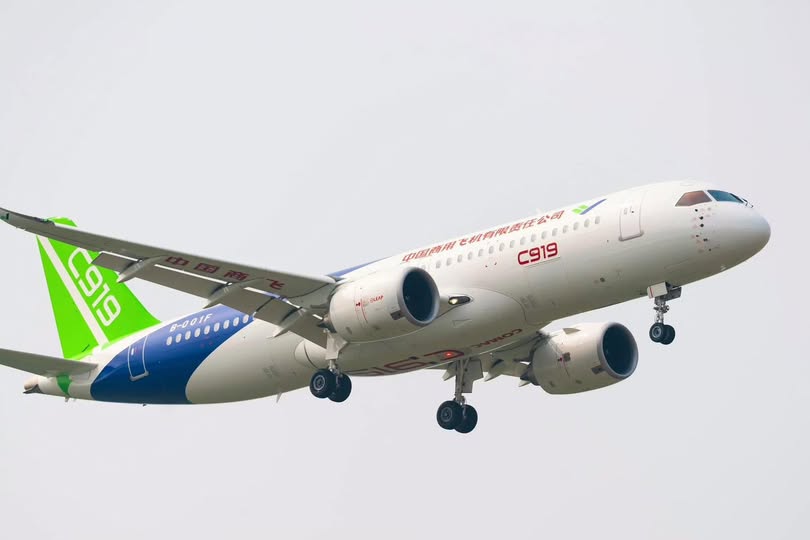
China's domestically developed C919 narrow-body passenger jet will begin its first scheduled international commercial service on August 12, marking a significant milestone for the country's aviation industry, according to Chinese media reports citing Air China.
The inaugural international route will connect Beijing with Ulaanbaatar, the capital of Mongolia, and will be operated by Air China using the C919 aircraft.
According to the airline, the service will operate daily, offering one round-trip flight between the two cities. The outbound flight is scheduled to depart Beijing Capital International Airport at 3:00 p.m. and arrive in Ulaanbaatar at 5:15 p.m. local time. The return flight will leave Ulaanbaatar at 6:30 p.m. and land back in Beijing at 8:35 p.m.
Air China announced that tickets for the new international service are now available for purchase.
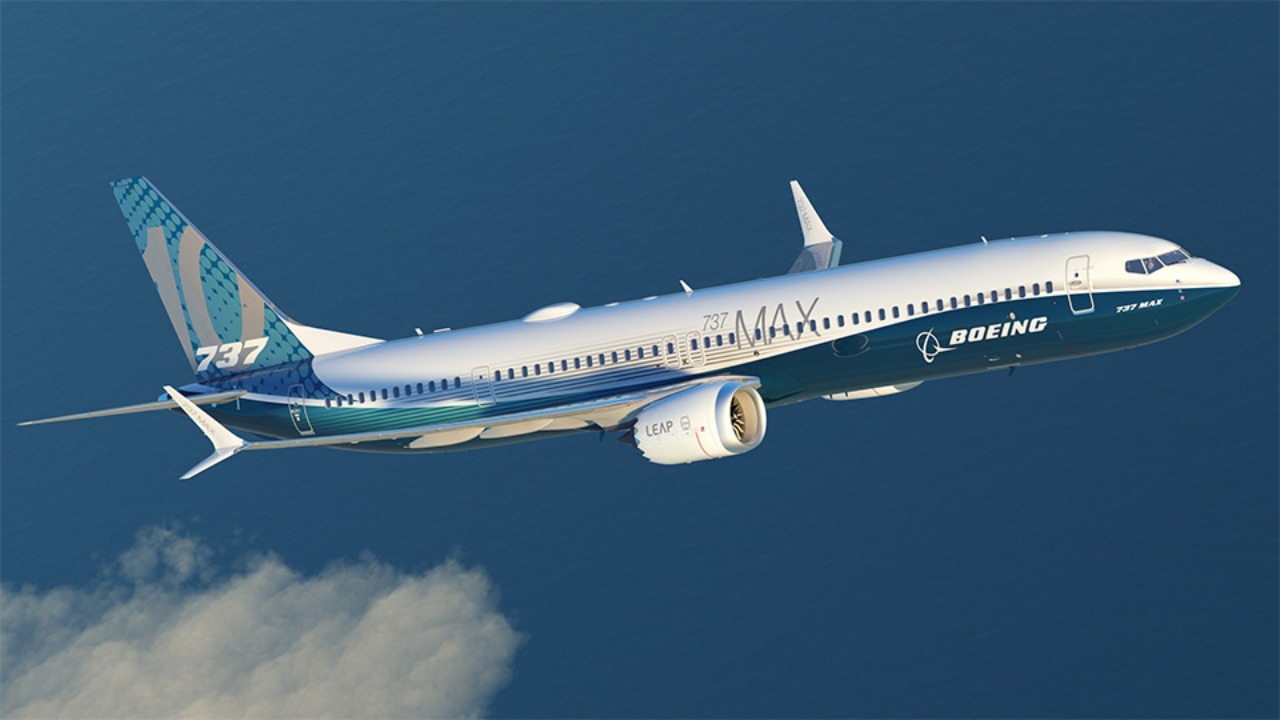
Developed by the Commercial Aircraft Corporation of China (COMAC), the C919 represents China's ambition to establish itself as a major player in the global commercial aviation market. The single-aisle jet was designed to compete with the Airbus A320neo and Boeing 737 MAX families in the highly competitive narrow-body segment.
The C919 program was officially launched in 2008, with the aircraft making its maiden flight in May 2017 after years of design, development, and testing. Following an extensive certification campaign, the Civil Aviation Administration of China (CAAC) awarded the aircraft its type certificate in September 2022, paving the way for commercial operations.
The jet entered commercial service in May 2023, when China Eastern Airlines operated the first revenue flight between Shanghai and Beijing. Since then, the C919 fleet has steadily expanded across China's domestic network, with operators including China Eastern Airlines, Air China, and China Southern Airlines deploying the aircraft on major trunk routes.
While the C919 incorporates numerous domestically developed technologies, it also relies on components supplied by leading international aerospace manufacturers, including engines, avionics, and flight control systems. COMAC has continued to refine the aircraft's performance and increase production as deliveries to Chinese airlines accelerate.
The launch of the Beijing–Ulaanbaatar service marks the first scheduled international commercial operation for the C919 and represents a significant step in COMAC's long-term strategy to broaden the aircraft's operational footprint beyond China's domestic market.
Industry observers view the relatively short international route as an ideal proving ground for the aircraft's cross-border operations while supporting regional connectivity between China and Mongolia. The service also provides COMAC with an opportunity to demonstrate the C919's reliability in international commercial service as it seeks broader recognition in the global aviation industry.
The international debut underscores China's growing confidence in its homegrown passenger aircraft and reflects the country's broader ambition to build a globally competitive commercial aviation manufacturing sector.
As production ramps up and more airlines add the C919 to their fleets, COMAC is expected to continue pursuing opportunities to expand the aircraft's presence on international routes in the years ahead.
The COMAC C919 is currently undergoing validation by the European Union Aviation Safety Agency (EASA). While EASA test pilots have already carried out flight evaluations in Shanghai, the regulator has indicated that the certification process is extensive and is expected to take another three to six years, with approval potentially coming between 2028 and 2031.
Before the aircraft can be certified for commercial operations in Europe, EASA must complete an independent assessment of the C919's design, avionics, flight systems, and software compliance with European safety standards. Although the aircraft entered commercial service in May 2023 and has accumulated more than 1,200 orders, its operations remain largely limited to China's domestic market.
Obtaining EASA certification is a key objective for COMAC, as it would enable the manufacturer to expand into international markets and strengthen the C919's credibility among global airlines. Until European validation is granted, airlines in Europe cannot purchase or operate the aircraft commercially.
Recent Reports indicated that China delayed administrative approvals for the delivery of nearly 20 Airbus aircraft, a move widely interpreted by industry observers as part of broader efforts to gain leverage in discussions over the European certification of the domestically developed COMAC C919.
Administrative delays: The Civil Aviation Administration of China (CAAC) reportedly slowed the processing of paperwork required for newly delivered Airbus aircraft to enter commercial service with Chinese airlines. The delays contributed to Airbus recording its weakest first-quarter commercial aircraft deliveries since 2009.
Certification pressure: According to industry reports, the delays were seen as a means of encouraging the European Union Aviation Safety Agency (EASA) to advance the certification process for the COMAC C919, China's indigenous narrow-body aircraft designed to compete with the Airbus A320 family and Boeing 737 series.
Issue resolved: Following discussions between Airbus and Chinese authorities, Airbus CEO Guillaume Faury confirmed that the administrative bottleneck had been resolved, allowing the backlog of completed aircraft to begin reaching customers.
EASA timeline: Although EASA has conducted validation flight tests of the C919 in Shanghai, the regulator has emphasized that the certification process remains technically demanding. Officials have indicated that full European certification could still take another three to six years before the aircraft is cleared for commercial operations in Europe.
COMAC has progressed with the C919-600, a shortened variant designed for better performance. This model features a fuselage that removes six frame bays compared to the standard C919-100, and it has completed high-speed taxi and braking tests in Shanghai.
You may like to read....

.jpg)