
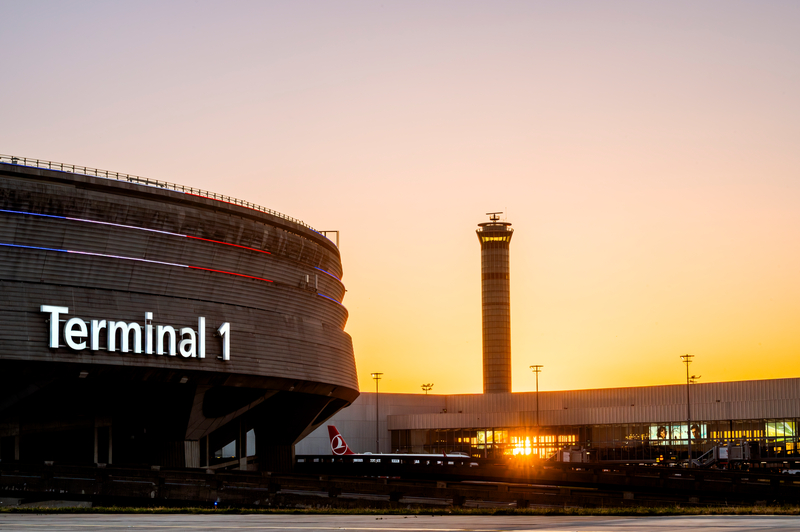
Record Modernization Program: The French government and Groupe ADP have agreed on a proposed 2027–2034 Economic Regulation Agreement (ERA) outlining an €8.2 billion ($9.7 billion) investment to modernize Paris airports.
Three-Phase Upgrades: Set to roll out between 2027 and 2034, the plan focuses on optimizing passenger security and border control, expanding Paris Orly boarding facilities, upgrading baggage handling, and extending Paris Charles de Gaulle's automated train.
Adjusted Fee Structure: Average airport charges will increase by inflation plus 2.1 percentage points over the eight-year period, slightly lower than Groupe ADP’s initial proposal of inflation plus 2.6 points.
H1 2026 Financial Results: Attributable net income rose to €312 million (more than tripling year-over-year, boosted by selling a partial stake in India's GMR Airports). Revenue grew 1.6% to €3.22 billion, while recurring EBITDA dipped 1% to €1.02 billion. Total group passenger traffic grew 0.2% to 179.2 million.
Lowered Full-Year Guidance: Citing Middle East conflicts impacting flight capacity and demand, Groupe ADP revised its 2026 Paris traffic growth forecast down to ~0.5% (from 1.5%–2.5%) and recurring EBITDA targets to €2.30–€2.35 billion.
Cost-Cutting Initiatives: In response to near-term headwinds, second-quarter cost-reduction measures aim to generate €40 million to €60 million in savings during the second half of 2026.
Paris-Charles de Gaulle Airport is approaching a decisive new stage in its long-running expansion story. After years of changing plans, the cancellation of the giant Terminal 4 project and a post-pandemic rethink of how much infrastructure the Paris hub actually needs, Groupe ADP and the French government have now reached an agreement on an €8.2 billion investment programme.
The plan is designed to increase the airport's annual capacity by around 18 million passengers by 2035, taking CDG towards a total of nearly 90 million passengers a year. It will be delivered over eight years under a new Economic Regulation Agreement (ERA), covering the period from 2027 to 2034. Groupe ADP says the programme represents the most ambitious investment programme ever undertaken in Parisian air transport.
The agreement announced on July 29, 2026, is not yet the final regulatory green light. Airlines are due to be consulted in September, while the French Transport Regulatory Authority (ART) is expected to issue its binding opinion later this autumn. Groupe ADP is targeting a definitive signing of the agreement by the end of November, with construction scheduled to begin in 2027.
.jpg)
The current programme is markedly different from the expansion envisaged less than a decade ago.
In 2019, Groupe ADP was preparing a vast new Terminal 4 that was intended to add between 35 million and 40 million passengers of annual capacity by 2037. The project would have effectively created another major airport within the existing CDG complex, with the overall airport expected to reach roughly 126 million passengers annually once the terminal was fully operational.
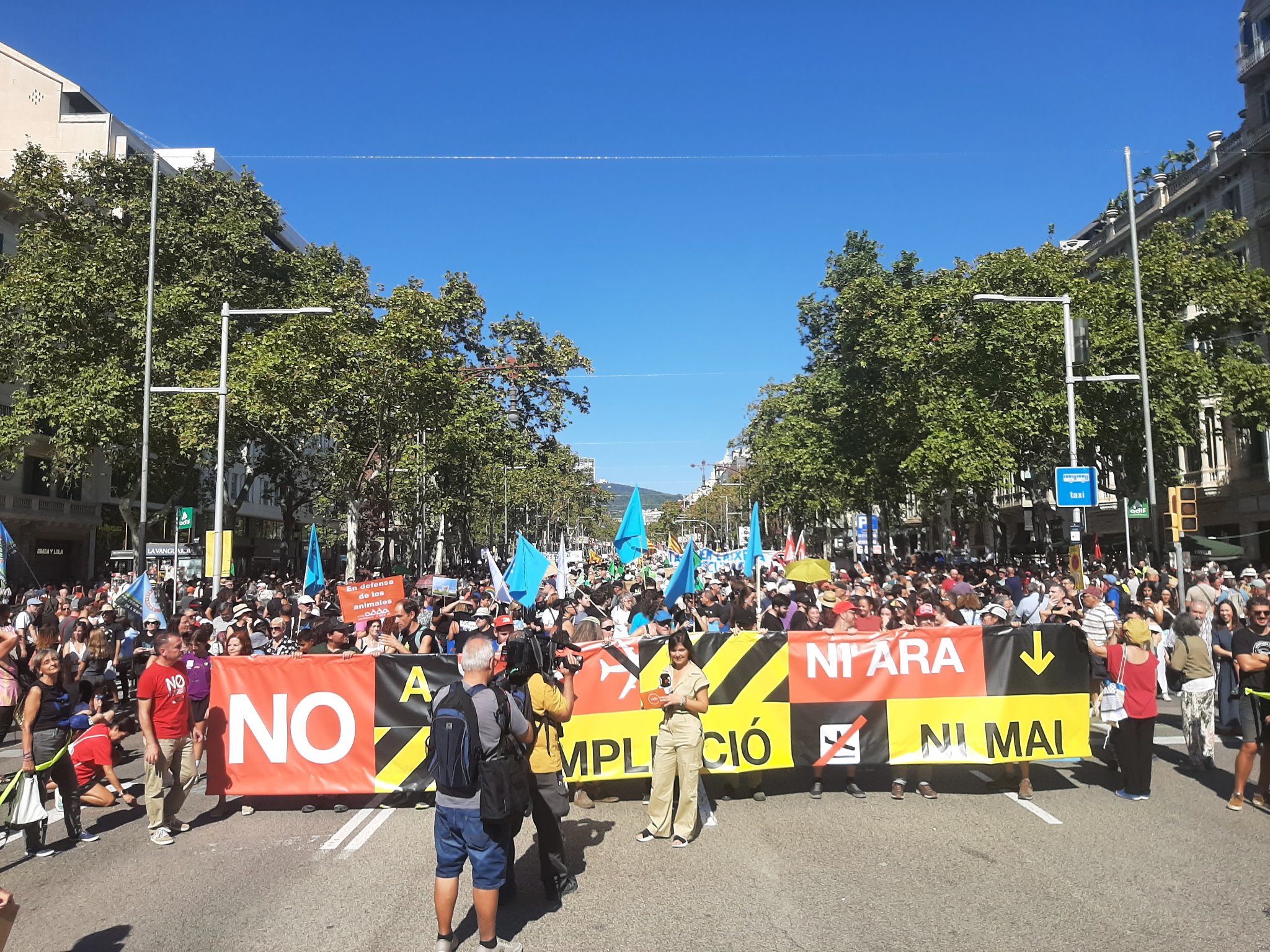
The scale of that proposal generated controversy even before construction could begin. Environmental organisations, local residents and elected officials questioned the impact of substantially increasing air traffic, while the project became part of a wider debate in France over the environmental future of aviation.
The COVID-19 pandemic then fundamentally altered the assumptions behind the project. Passenger traffic collapsed and the expected timetable for capacity expansion was thrown into doubt. In February 2021, the French government asked Groupe ADP to abandon the existing Terminal 4 project and develop a new plan for CDG, explicitly citing the consequences of the pandemic and the need to reconsider the airport's development in light of the aviation sector's environmental transition.
The cancellation did not mean that the question of CDG's long-term capacity disappeared. Instead, Groupe ADP began working on a more modular approach: rather than constructing a huge new terminal, the airport would make greater use of its existing infrastructure while removing operational bottlenecks.
That philosophy is at the heart of the programme now approaching approval.
.jpg)
The new project is less about creating an entirely new airport within CDG and more about transforming the way the existing airport operates.
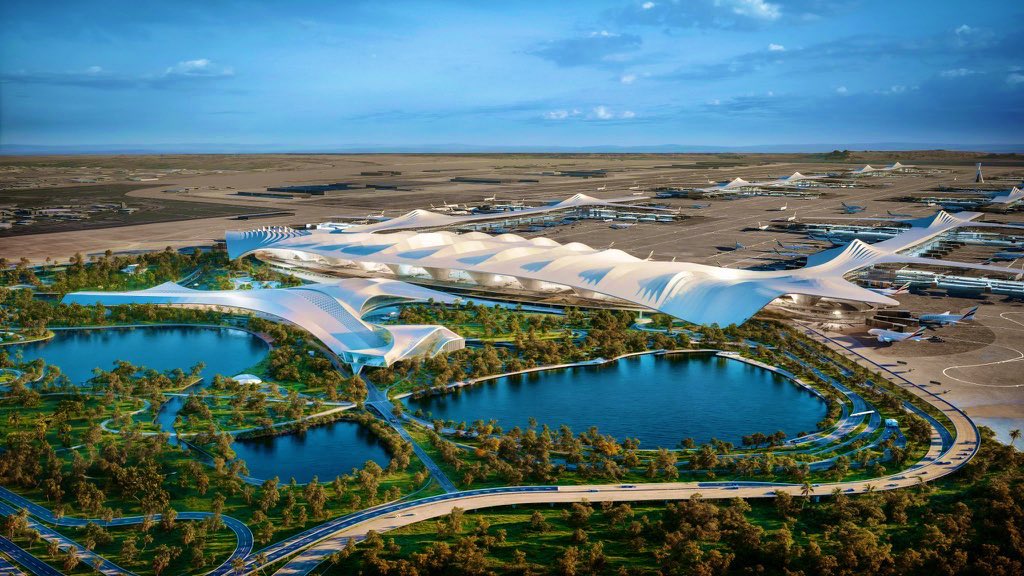
One of the principal projects will be a new boarding satellite replacing Terminal 2G. Unlike the current arrangement, in which passengers using 2G are transported by bus, the new facility will be connected to the main CDG hub through an extension of the internal rail system serving the 2E complex.
The programme also includes a completely new internal rail connection designed to make transfers around the enormous airport more efficient. Border-control capacity and security checkpoints will be expanded, while access to the terminals will be redesigned.
A new multimodal transport facility is also planned, intended to improve connections between air travel and other forms of transport, including the future CDG Express service. Groupe ADP has separately been preparing a broader simplification of the passenger journey: from March 2027, the airport is scheduled to adopt simpler terminal names, replacing the complicated combination of numbers and letters currently used for many of its buildings and boarding areas.
The emphasis is therefore not simply on adding gates and passenger-processing capacity. Much of the investment is intended to make CDG function more efficiently, particularly for connecting passengers.
That is significant for a hub airport where infrastructure constraints can affect airlines even when theoretical passenger capacity exists.
Here is a structured overview of the planned modernization phases:
Phase 1 (2027–2030): Prioritizes passenger flow improvements by reducing border wait times and deploying latest-generation security screening machinery.
Phase 2 (2030–2032): Focuses on capacity optimization, expanding check-in counters and baggage delivery systems while renovating boarding lounges.
Phase 3 (2032–2034): Enhances broader airport connectivity with new infrastructure projects and improved intermodal transit integrations.
The change in strategy reflects lessons learned from the previous expansion proposal.
The Terminal 4 project was conceived at a time when continued growth in global aviation appeared almost inevitable. It was intended to accommodate as many as 40 million additional passengers each year and hundreds of additional daily flights.
But the project encountered strong criticism over its environmental consequences and its impact on surrounding communities. The pandemic subsequently provided the immediate catalyst for its cancellation.
The new programme attempts to strike a different balance. Groupe ADP's December 2025 proposal described the strategy as more efficient, modular and progressive, based on an assumption of average traffic growth of approximately 1.6% per year rather than the much more aggressive expansion assumptions that underpinned the earlier Terminal 4 plan. The original proposal carried an €8.4 billion investment envelope; the agreement reached with the French government has reduced that figure to €8.2 billion.
In other words, the new plan does not simply revive Terminal 4 under another name. It represents a fundamentally different development philosophy.
The programme nevertheless faces opposition from parts of the airline industry.
Groupe ADP's investment will be financed without direct public funding. Instead, the regulated investment programme is linked to airport charges paid by airlines. That makes the level and structure of future airport fees one of the most contentious aspects of the agreement.
The issue is particularly sensitive for airlines whose business models do not depend heavily on connecting traffic through CDG. Smaller French carriers have argued that they could be required to contribute to infrastructure primarily benefiting the hub strategy of larger airlines, particularly Air France.
The controversy reflects a fundamental question: who should pay for an expansion designed partly to strengthen Paris as an international connecting hub?
Air France has strongly supported improvements at CDG, while other carriers have expressed concerns about the costs they could face. The debate also recalls criticism from Air France-KLM chief executive Ben Smith in 2024, when he argued that CDG needed greater investment in existing facilities, including gates, baggage systems and border-control infrastructure, rather than simply building new capacity.
The current plan, in some respects, responds directly to that criticism by placing substantial emphasis on existing infrastructure and operational efficiency.
.jpg)
The agreement between the French government and Groupe ADP is therefore an important milestone, but it is not the end of the process.
The Autorité de Régulation des Transports (ART) already examined an earlier version of the 2027–2034 Economic Regulation Agreement. In April 2026, the regulator said the exceptional eight-year duration was consistent with the scale of Groupe ADP's industrial programme, but it also issued recommendations concerning tariff structures, transparency and the information provided to airport users.
The regulator's role is particularly important because the ERA determines the framework governing airport charges and investment over a period much longer than a conventional annual tariff decision.
The July agreement between the State and Groupe ADP incorporated the ART's earlier recommendations following further technical discussions. The next stage will be consultation with airlines in September, followed by the regulator's binding review.
If the timetable holds, the agreement could be formally concluded by the end of November, clearing the way for construction to begin in 2027.
Even though the new plan is considerably smaller than Terminal 4, environmental opposition has not disappeared.
More than 250 national and local elected officials signed an opinion piece in February 2026 arguing that expanding Roissy was incompatible with France's climate objectives. Environmental campaigners have also questioned whether increasing airport capacity is consistent with the long-term decarbonisation of aviation.
A study published in late 2025 by Transport & Environment and Carbone 4 estimated that the proposed CDG expansion could result in the airport emitting 28% more CO₂ in 2050 than it does today.
Groupe ADP's argument is different: Paris must remain competitive with other major European and global hubs, and the airport must improve its infrastructure to accommodate the traffic that is expected to materialise. The company is consequently attempting to reconcile capacity growth with more efficient infrastructure, rather than pursuing the enormous physical expansion represented by Terminal 4.
That tension will remain one of the defining issues surrounding the project.
CDG's development has therefore come full circle.
The airport once appeared destined for a massive new terminal capable of pushing annual traffic beyond 120 million passengers. The pandemic brought that vision to an abrupt halt. Five years later, Groupe ADP has returned with a smaller but still extraordinarily expensive programme focused on rail connections, passenger processing, terminal access and selective additional capacity.
The objective is now clear: add approximately 18 million passengers of annual capacity by 2035 while avoiding the "gigantism" of the previous Terminal 4 concept.
Whether the €8.2 billion programme ultimately delivers that balance will depend on several factors: the final regulatory decision, the reaction of airlines to higher charges, the pace of passenger growth and the continuing pressure to reduce aviation's environmental impact.
For CDG, however, the next few months represent a decisive moment. After years of cancelled plans, political debate and post-pandemic uncertainty, France is once again preparing to invest billions in the future of its principal international aviation gateway.
.jpg)
- 3,257 hectares of surface area, nearly 1/3 of the size of Paris
- More than 1,100 hectares of green spaces
- Nearly 500 listed species of flora and fauna at the airport
- 9 terminals, 67.4 million passengers and 448,000 movements in 2023
- 4 runways - a north pair and a south pair
- Approx. 90,000 employees in 700 companies making up the Paris-CDG airport community
- Europe’s No. 1 airport and in the world’s Top 5 according to the Skytrax 2023 ranking