
NATO is interested in the Saab GlobalEye to replace its aging fleet of Boeing E-3 Sentry, marking a potential strategic shift away from decades of reliance on U.S.-built airborne early warning systems (AWACS aircraft), as published by European media.
The development, if found to be binding, strengthens resilience and cost efficiency while reshaping alliance-level command and surveillance capabilities for contested, multi-domain operations.
For now, Swedish Saab has not confirmed an NATO contract to supply the GlobalEye and assures that no agreement has been signed, contrary to information published on April 21 by La Lettre. However, the manufacturer confirms that discussions are underway as part of the Alliance's acquisition process.
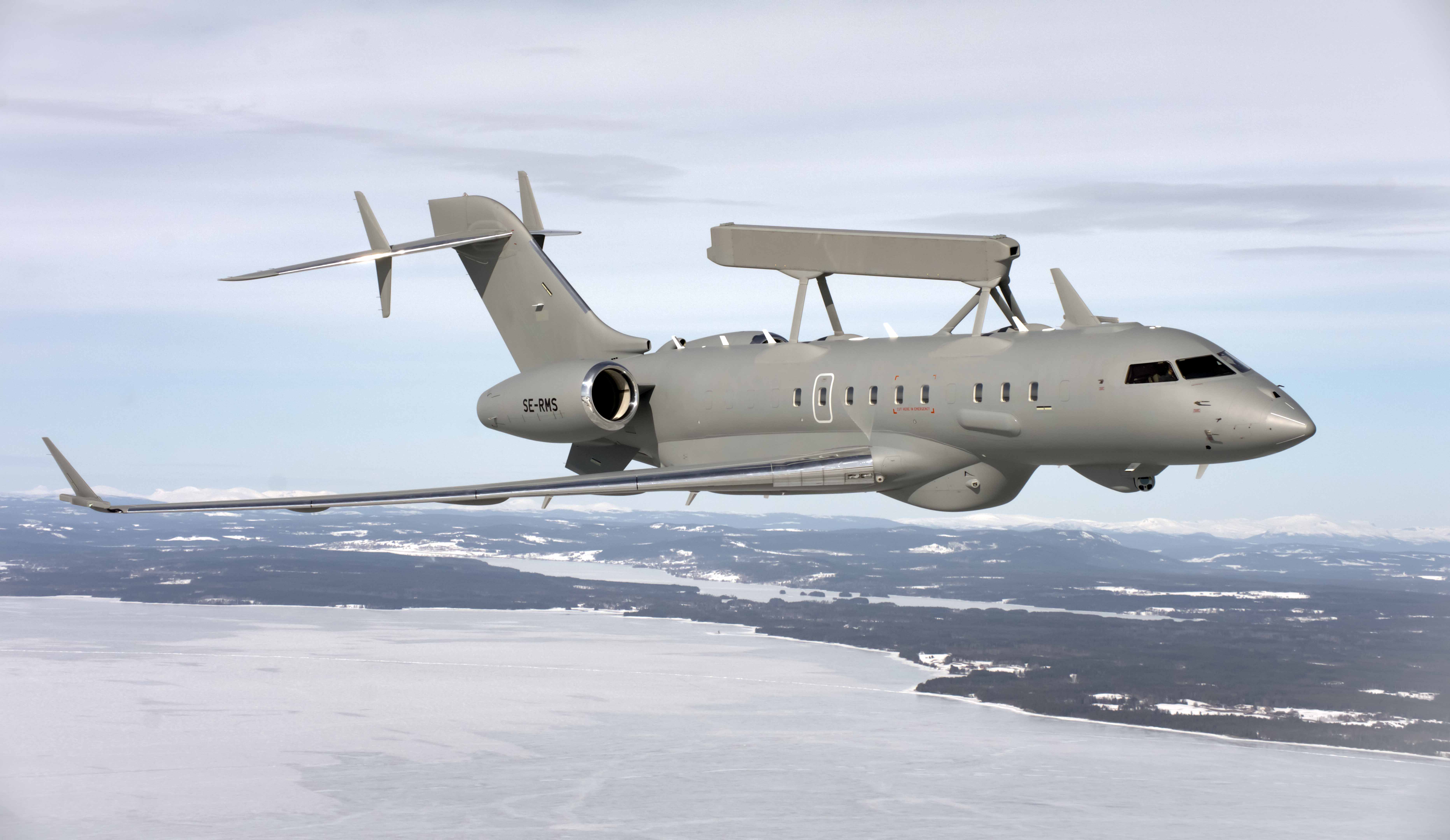
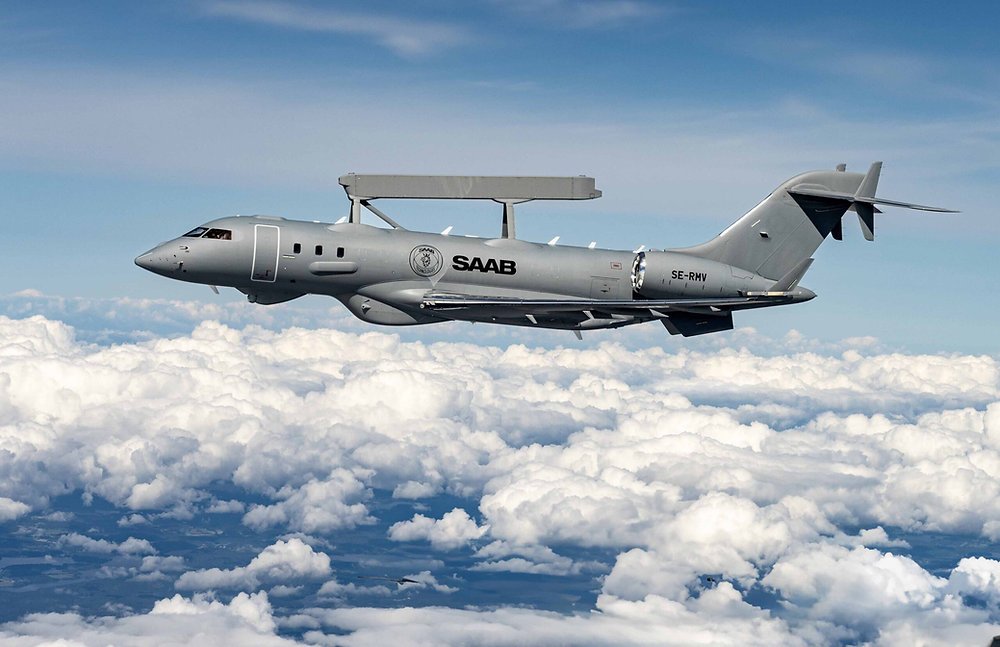
The Saab GlobalEye features AESA radar, multi-domain sensing, and long-endurance business jet performance to deliver wider coverage, faster tracking, and lower operating costs than legacy platforms or the Boeing E-7 Wedgetail.
GlobalEye's network-centric design supports distributed ISR and reduces crew and infrastructure demands, aligning NATO with a more flexible and survivable model for future air and missile defense environments.
| Version: Bombardier Global 6000 | |
|---|---|
| Crew | 2 |
| Operational range | 11,000 km (6,835 mi) |
| Endurance | 11 hours |
| Maximum speed | 1110 km/h (690 mph) |
| Wing area | 94.9 m² (1021.5 sqft) |
| Wingspan | 29 m (95.1 ft) |
| Height | 7.8 m (25.5 ft) |
| Length | 30.3 m (99.4 ft) |
| Service ceiling | 16,000 m (52,493 ft) |
| Empty weight | 23,690 kg (52,227 lbs) |
| Max. takeoff weight | 45,100 kg (99,428 lbs) |
| Takeoff distance | 2,000 m (6,562 ft) |
| Powerplant | 2 x BR700-710D5-21 delivering 3,345 kgf each |
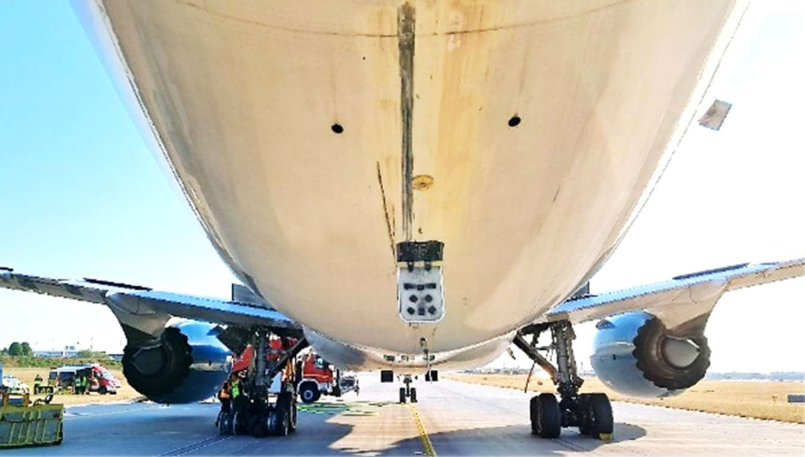
The U.S. Air Force and NATO are able to employ complex and large-scale air tactics because they possess air support capabilities such as early warning and control aircraft and aerial refueling tankers. The E-3 Sentry, in particular, excels at monitoring and controlling combat airspace. However, the Boeing 707 platform has ceased operation by civilian airlines, eliminating its supply chain.
The Office for Government Accountability has also pointed out that "the E-3 has failed to meet the Air Force's readiness target for nine consecutive years due to issues with spare parts supply and maintenance of aging aircraft."
In November 2025, the Dutch Ministry of Defence announced that it had "unanimously decided to cancel the procurement of the E-7, which had been selected as the successor to the E-3 for NATO."
Media outlets La Lettre, Hartpunkt, and German Press Agency (dpa) published on April 23, 2026 that the NATO Support and Procurement Agency (NSPA) have chosen the Saab GlobalEye to replace its fleet of fourteen U.S. Boeing E-3 airborne early warning and control (AEW&C) aircraft, in the first replacement of the alliance’s AWACS aircraft fleet since its existance from 1980s.
Later, others including Tim Martin and Clément Charpentreau, said that Saab CEO Micael Johansson stated during the company’s Q1 results call that Saab has provided information to NATO regarding the GlobalEye system under the Allied Future Surveillance and Control program.
The latest decision heats up the competitive process in early 2026 after the U.S. withdrew from the E-7 program in June 2025, cancelling its own procurement and shifting toward a combination of satellite-based surveillance under the Golden Dome concept and the continued use of E-2 Hawkeye.
The Boeing E-7A Wedgetail is an advanced Airborne Early Warning and Control (AEW&C) platform based on the 737-700, featuring a MESA radar ("surfboard") for 360-degree, long-range aerial and maritime surveillance.
For the AWACS functions, the NATO Support and Procurement Agency, responsible for the acquisition within the Alliance Future Surveillance and Control program, mulls an order of between 10 and 12 GlobalEye aircraft at a unit cost of about €550 million.
The total acquisition value would therefore exceed €5 billion without including training, infrastructure, or long-term sustainment.
For Pentagon, in June 2025, Secretary of Defense Heggesses of the Trump administration mentioned that
"the E-7 is unsustainable on the modern battlefield," "a transition to space-based AMTI capabilities," and "the use of the E-2D to address short-term capability gaps."
"If our systems and platforms are not viable on the modern battlefield or if they do not give us any advantage in a future fight, then we must make difficult decisions now. The E-7 is an example of this," Mr. Hegseth argued.
E-7A Wedgetail related funding also disappeared from the 2026 fiscal year budget proposal submitted by the Department of Defense to Congress.
The current NATO AWACS fleet consists of fourteen E-3 Sentry early warning aircraft based on the Boeing 707, with deliveries completed between the early 1980s and early 1990s, resulting in a present average airframe age of nearly 40 years.
E-3 Sentry aircraft are equipped with a mechanically rotating radar dome mounted above the fuselage, providing 360-degree coverage and detection ranges exceeding 400 km for airborne targets, depending on altitude.
Their operational roles include airspace surveillance, identification of hostile aircraft, coordination of intercept missions, and acting as airborne command posts through real-time data links with ground, naval, and air units.
For NATO, once confirmed, this decision effectively ends Boeing’s position as the exclusive supplier of NATO AWACS aircraft since 1988 and introduce a European and Canadian industrial combination into a core alliance capability.
You may like to read....

.jpg)