
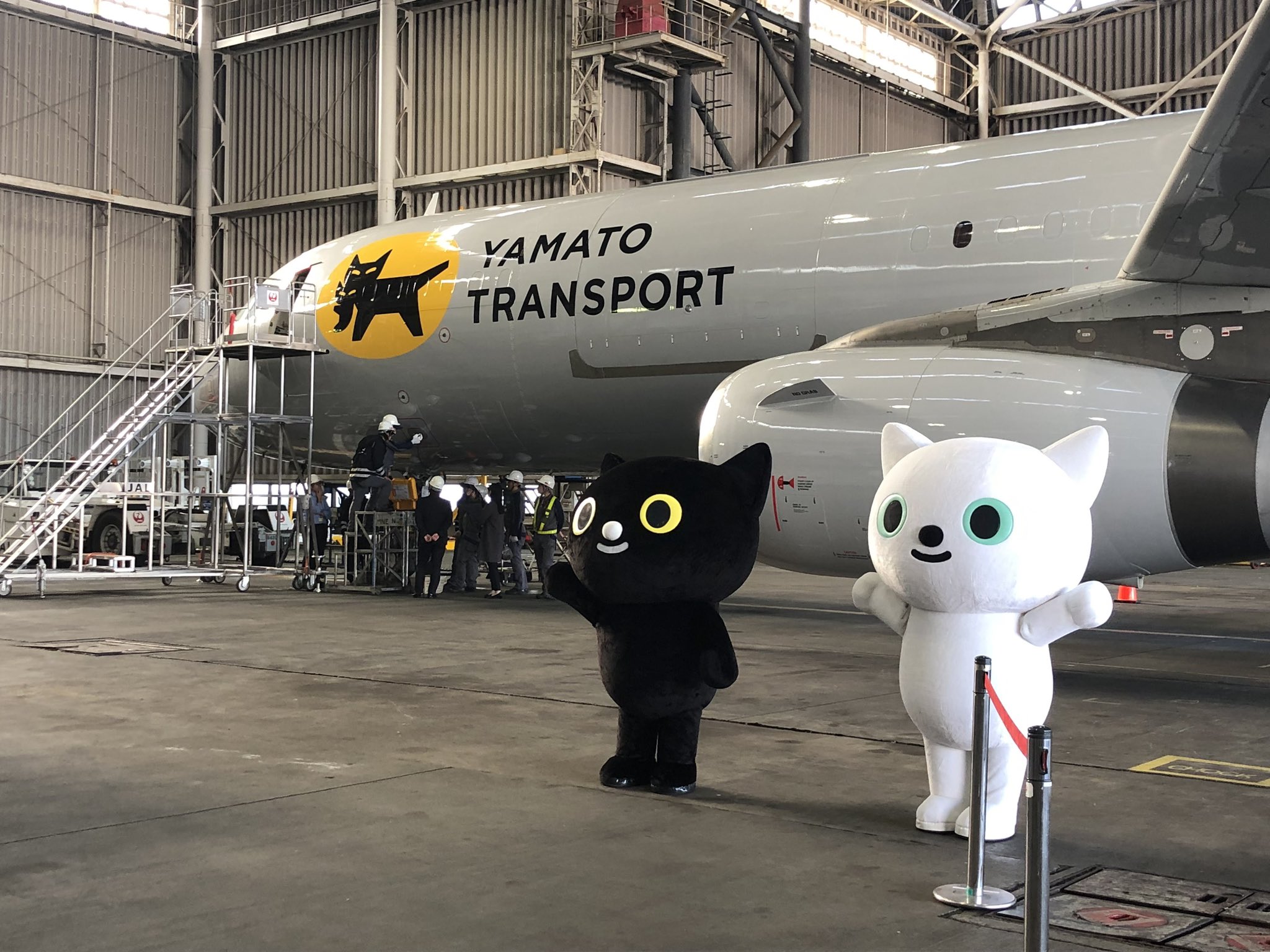
Yamato Holdings, Japan Airlines (JAL) and JAL Group carrier Spring Japan have decided to end their domestic dedicated freighter operation by around June 2027, bringing an end to an ambitious aviation-logistics project launched only three years earlier.
The decision, announced on September 3, 2026, reflects a fundamental change in the economics of domestic air freight in Japan. Although road transportation continues to face driver shortages and higher costs, Yamato and JAL said persistent yen depreciation and elevated aviation-fuel prices have increased air-transport costs more than initially anticipated, causing the price gap between air and trucking to widen rather than narrow.
The companies now believe that making greater use of cargo capacity in passenger aircraft—the passenger-flight “belly” network—along with other transportation modes will provide a more sustainable solution.
The origins of the project go back to January 2022, when Yamato and JAL announced plans to develop a new domestic air-cargo network in response to structural changes in Japan's logistics industry.
The central issue was Japan's looming “2024 problem”: regulatory changes limiting truck drivers' working hours were expected to reduce available road-freight capacity at a time when e-commerce was driving continued growth in parcel volumes.
Yamato and JAL therefore sought to establish an alternative transportation network capable of moving parcels rapidly between Japan's major regions while reducing dependence on long-distance trucking.
In November 2022, the companies announced plans for three Airbus A321ceo Passenger-to-Freighter (P2F) aircraft, with a planned network of four routes and as many as 21 flights per day once all three aircraft were operational. The planned network included Tokyo–Kitakyushu, Tokyo–New Chitose, Tokyo–Naha and Naha–Kitakyushu.
The A321P2F offered a useful combination of capacity and frequency. Each aircraft was designed for a maximum payload of approximately 28 tonnes, equivalent to the cargo carried by roughly five to six 10-tonne trucks. The aircraft could accommodate 14 AAY containers on the main deck and 10 AKH containers in the lower deck.
The project also involved giving former passenger aircraft a second life.
Conversion work began in Singapore in May 2023, under the Passenger-to-Freighter program involving EFW and ST Engineering. The aircraft were stripped of passenger interiors and modified for cargo operations before being prepared for service in Japan.
Operational responsibility was assigned to Spring Japan, a JAL Group subsidiary, rather than Yamato itself. This created a partnership combining Yamato's nationwide parcel-logistics network with JAL Group's aviation expertise.
The dedicated freighter operation officially began on April 11, 2024.
The three A321-200P2F aircraft were introduced as a new component of Yamato's logistics network, with the initial operation linking Narita, New Chitose, Kitakyushu and Naha. The companies presented the service as a way to strengthen transportation resilience while addressing labor shortages and the vulnerability of road networks to events such as heavy snow, flooding and earthquakes.
The concept was subsequently expanded.
On August 1, 2024, the operation added Haneda Airport, connecting it with New Chitose and Kitakyushu. The Haneda operation was particularly notable because it provided a domestic scheduled dedicated-freighter service during late-night and early-morning hours, when passenger aircraft were not normally operating. This allowed time-sensitive cargo—including agricultural and seafood products—to be moved while preserving daytime production, harvesting and fishing schedules.
The fundamental problem was that the factors making trucking more expensive also affected aviation.
Japan's road-freight sector continues to experience driver shortages, rising labor costs and higher fuel expenses. However, the Yamato-JAL model depended on air transportation remaining economically competitive for the types of shipments being moved.
Instead, the companies said the weak yen and high aviation-fuel costs had significantly increased the cost of operating the freighter network. Importantly, they said the resulting price difference between trucking and aviation had expanded contrary to the assumptions behind the original project.
That has made it increasingly difficult to justify maintaining dedicated aircraft for cargo that can potentially move through existing passenger-flight capacity.
The wider aviation environment has also remained challenging. JAL reported in its fiscal 2026 first-quarter results that fuel costs and yen depreciation had sharply increased expenses, with operating expenses rising 18.7% year-on-year to ¥516.8 billion.
The decision does not mean Yamato and JAL are abandoning air freight.
Instead, the companies intend to shift toward a more flexible multimodal model, making greater use of belly cargo on passenger flights and other transportation options. Customers currently using the dedicated freighters are expected to be transitioned to alternative services.
The companies specifically highlighted Kyushu and Hokkaido as regions where demand for air logistics is expected to remain strong, particularly for industrial products such as semiconductors and automobiles, as well as agricultural and seafood products.
They intend to continue using airports including Kitakyushu and New Chitose, which Japan is developing as important international air-logistics hubs.
The Yamato-JAL freighter project is an important case study because its original rationale remains valid.
Japan still faces structural constraints in road freight. E-commerce continues to require rapid parcel distribution, and businesses need alternatives when road capacity is constrained.
What changed was the relative economics of the alternatives.
Dedicated freighters provide advantages that passenger aircraft cannot always match: predictable cargo capacity, overnight schedules, specialized loading and the ability to operate routes based specifically on freight demand.
But those benefits come with the fixed costs of aircraft ownership or leasing, crews, maintenance, fuel, airport operations and network utilization. If the freight premium is insufficient to cover those costs, using existing passenger aircraft capacity can become the more attractive option.
The Yamato-JAL experiment therefore illustrates a broader lesson for air cargo: speed alone does not guarantee a sustainable freighter business model.
The current plan is for the existing domestic freighter operation to continue until around June 2027, although individual routes may end at different times as the transition progresses.
Bottom line: Yamato and JAL's dedicated freighter experiment was conceived as a solution to Japan's road-freight capacity problem. Three years after launch, the solution is being redesigned—not because the need for rapid logistics has disappeared, but because the economics of operating dedicated aircraft have changed. The next phase will rely more heavily on integrating passenger-flight belly capacity with other transport modes, creating a potentially leaner and more flexible multimodal logistics network.

.jpg)