
The major damage sustained by a cargo plane during a hard landing in 2024 in Nunavik was the result of a downdraft, reveals the latest report from the Transportation Safety Board of Canada (TSB).
The Transportation Safety Board of Canada (TSB) released its investigation report (A24Q0027) into a 2024 hard landing of a De Havilland DHC-8-314 aircraft, operated by an Air Inuit Ltd., at the Kangiqsujuaq (Wakeham Bay) Airport in Quebec.
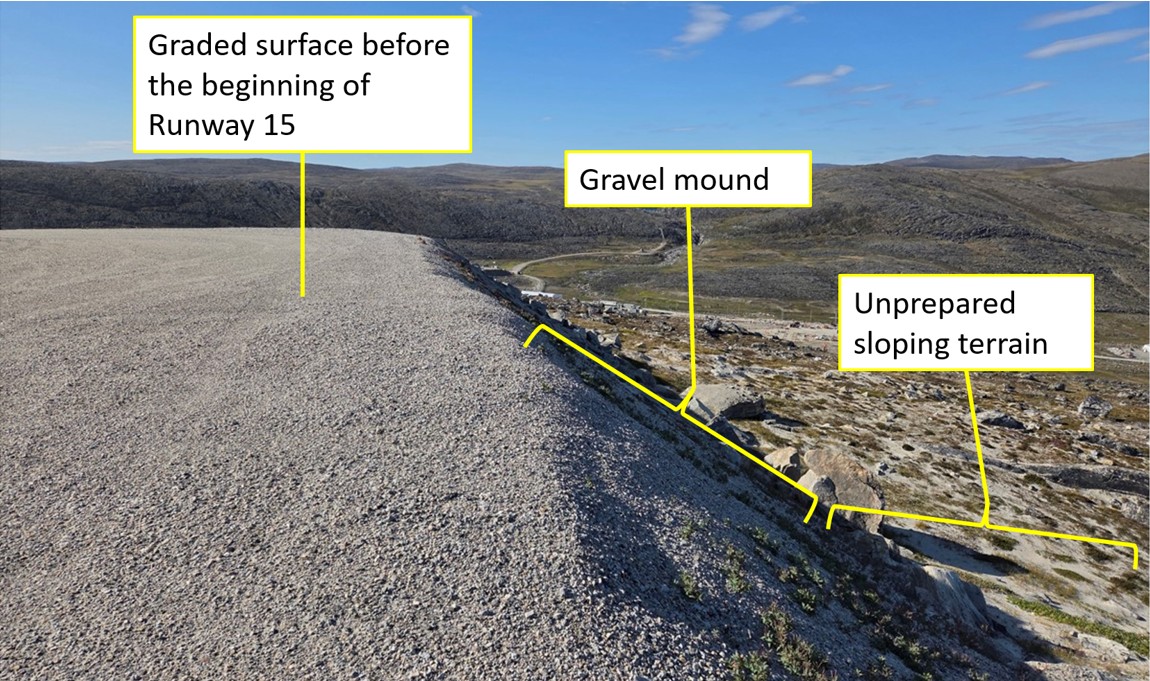
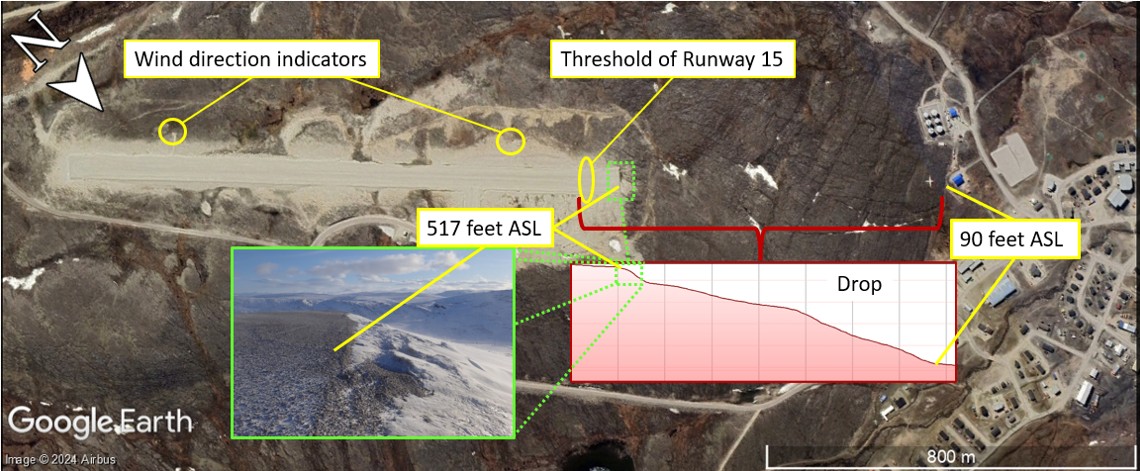
The report, published Thursday, indicates that at the time of landing the [aircraft's] wheels touched the ground approximately 67 meters before the runway threshold, hitting a gravel embankment at Kangiqsujuaq Airport on March 30, 2024.
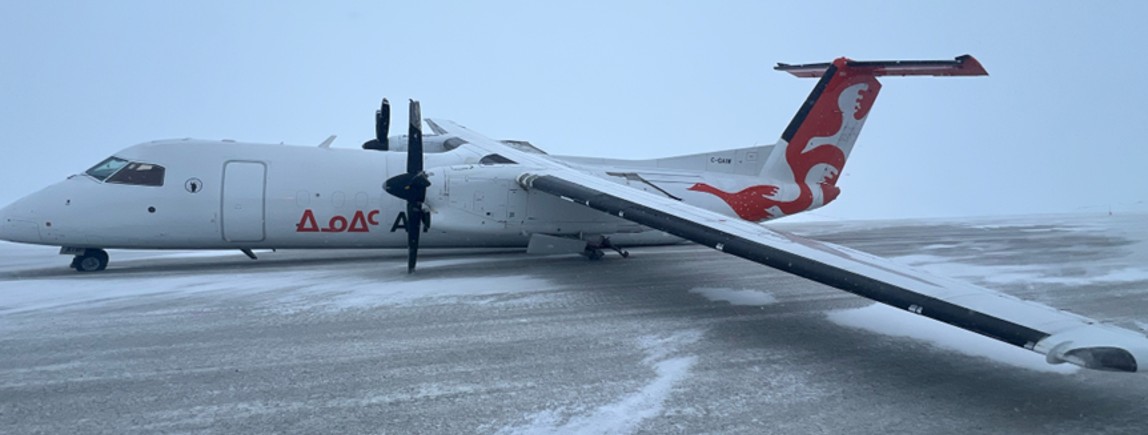
The report read as:
At 1554:33, the main landing gears touched down on the gravel mound that delineates the end of the runway, 220 feet before the threshold (Figure 2). The left wheel touched the ground approximately 5 inches below the runway, and the right wheel touched down approximately 4 inches below the runway.
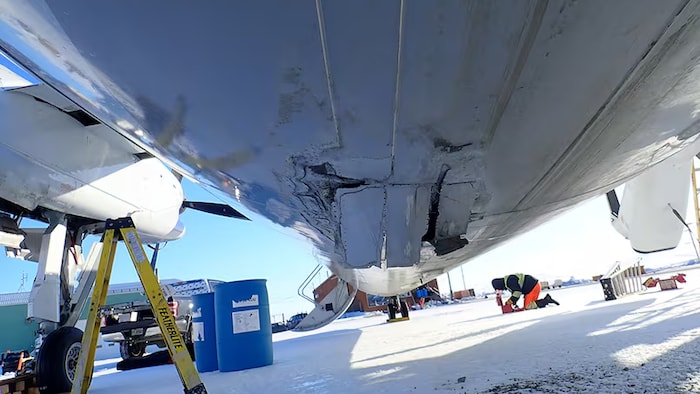
The aircraft sustained significant damage to the left landing gear, left propeller, and left nacelle. The lower rear section of the fuselage showed abrasion damage, as well as perforations in the skin and dents in the structure , the report stated.
The investigation revealed that the pilot attempted to land near the runway threshold to limit the risk of overshooting the end of the runway, a common practice for short runways , according to report.
The pilot tried to straighten the nose of the aircraft to make a smooth landing, but downdrafts prevented the crew from stopping the descent, causing the wheels to touch down in the gravel before reaching the runway.
The piston subassembly and wheels broke free from the left landing gear. The aircraft bounced, and the captain landed the aircraft on the runway, while remaining in the centre of the runway. The aircraft came to a stop approximately 2100 feet beyond the threshold of Runway 15.
In mountainous terrain like that found near Kangiqsujuaq, the force of the winds can sometimes exceed the ability of aircraft to recover and gusts can create turbulence.
When the unstable air moves over a mountain peak, which acts as a barrier, it then flows downward often in the form of relatively violent downdrafts. The speed of the descending air can sometimes exceed an aircraft’s climbing ability.
Taking into account the topography around CYKG and the winds present at the time of the occurrence, the investigation determined there were likely downdrafts in the final approach area for Runway 15 at that time, said the report by Transportation Safety Board of Canada.
Following the incident, Air Inuit conducted an investigation and issued a safety alert on the risks associated with short landings, in addition to updating its stabilized landing criteria and modifying its training program.
That investigation found that company pilots had a tendency to attempt to land close to the runway threshold on gravel runways. The investigation also found that flight crews did not always fully understand landing performance calculations.
More specifically, they did not understand how much of a safety margin was already included in the calculations and that the calculations were based on crossing the threshold at a height of 50 feet.
The company’s stabilized landing criteria were updated, specifying that the vertical flight path is leading to the “desired touch down zone (DTDZ)”.
Air Inuit also made the following amendments to its training programs:
Visual courtesy: Transportation Safety Board of Canada (TSB)

.jpg)
.jpg)