
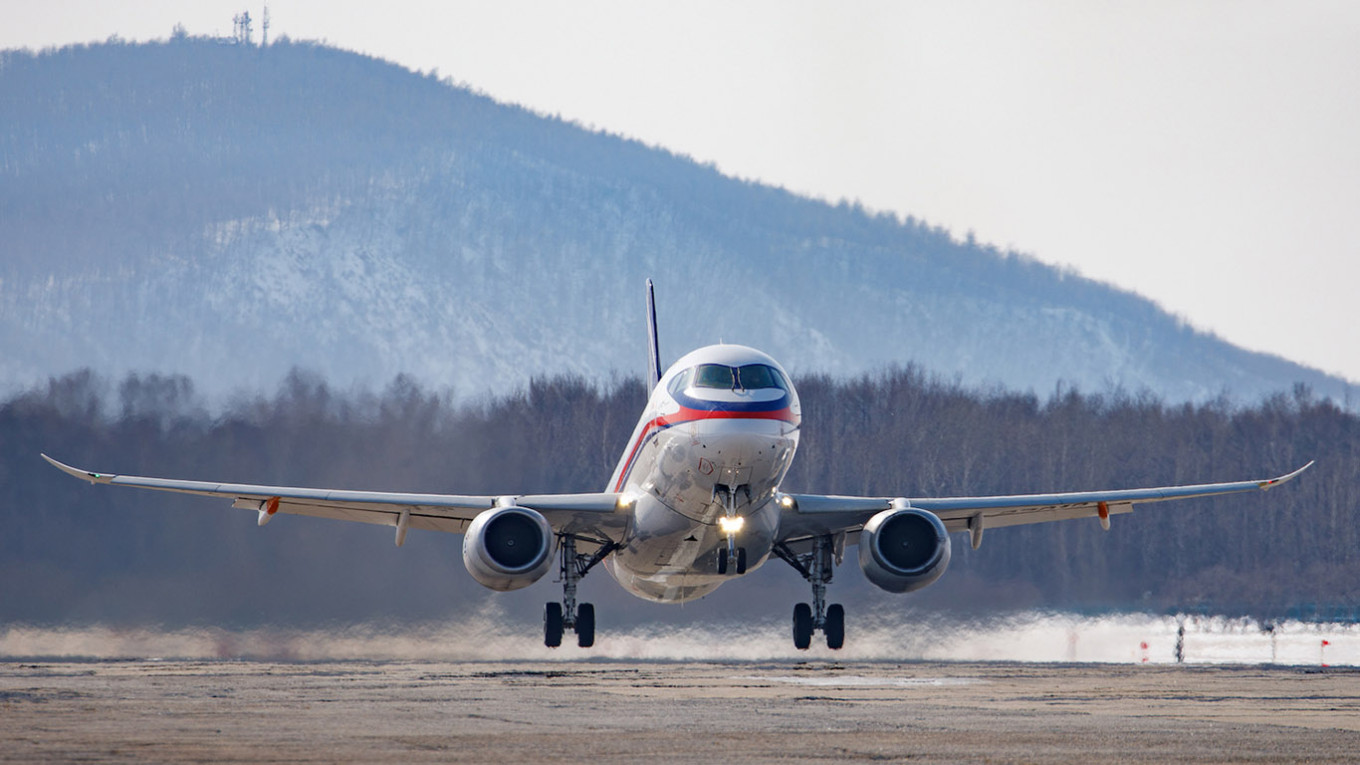
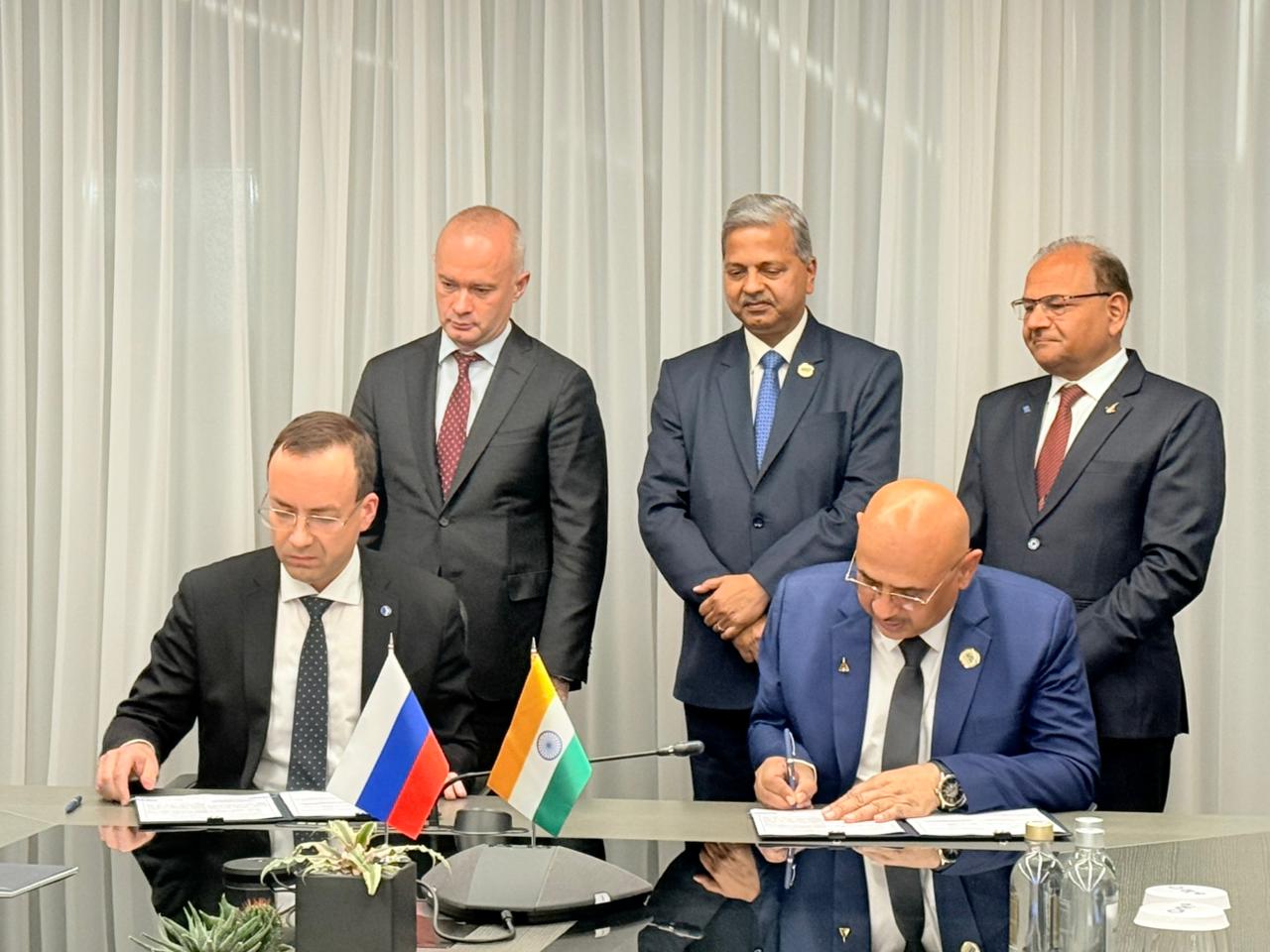
Hindustan Aeronautics Limited (HAL) and Russia's Public Joint Stock Company United Aircraft Corporation (PJSC-UAC) have signed a Memorandum of Understanding (MoU) to produce for the first time a passenger aircraft, the SJ-100, in India.
The Sukhoi SuperJet SJ-100 is a Russian twin-engine, narrow-body aircraft designed for short-haul flights. Over 200 SJ-100s have already been produced and are currently in operation with more than 16 commercial airlines globally.
Under this collaboration, HAL will gain the rights to manufacture SJ-100 aircraft for Indian customers. The aircraft is expected to play a key role in improving regional air connectivity under the Indian UDAN Scheme.
This is the first time a complete passenger aircraft will be manufactured in India. The last such project by the company was the production of the AVRO HS-748, which began in 1961 and concluded in 1988, said the release.
This deal comes at a time when the US is keeping close watch on Indo-Russian ties. US president Donald Trump has also imposed a penalty of 25% on Indian exports to that country for India’s purchase of crude from Russia.
Interestingly, Russia’s public joint stock company UAC is under US, European Union, and British sanctions. The US treasury has called the firm a key enterprise in Russia's military-industrial complex.
In a bold move, India has said it does not subscribe to unilateral U.S. sanctions and has criticised the targeting of its ties with Moscow as unjustified and unfair, while accusing the West of double standards because the EU and the US still buy Russian goods worth billions of dollars, those include key material Titanium, used in the Aerospace manufacturing industry.
However, HAL, in its press release, said the partnership with UAC reflects mutual trust and is a major step towards 'Aatmanirbhar Bharat' in the aviation sector.
According to the document, the Indian company received the right to produce the SJ-100 for domestic customers.
"This will also be the first time that a full-fledged passenger aircraft will be produced in India. The last such project was the production of the AVRO HS-748 by HAL, which began in 1961 and ended in 1988," the report says.
HAL also noted that to date, more than 200 SJ-100 aircraft have been produced, which are operated by more than 16 commercial airlines.
HAL added in its release,
"It is estimated that over the next ten years, the Indian aviation sector will require over 200 jets in this category for regional connectivity and an additional 350 aircraft for the Indian Ocean region to serve nearby international tourist destinations."
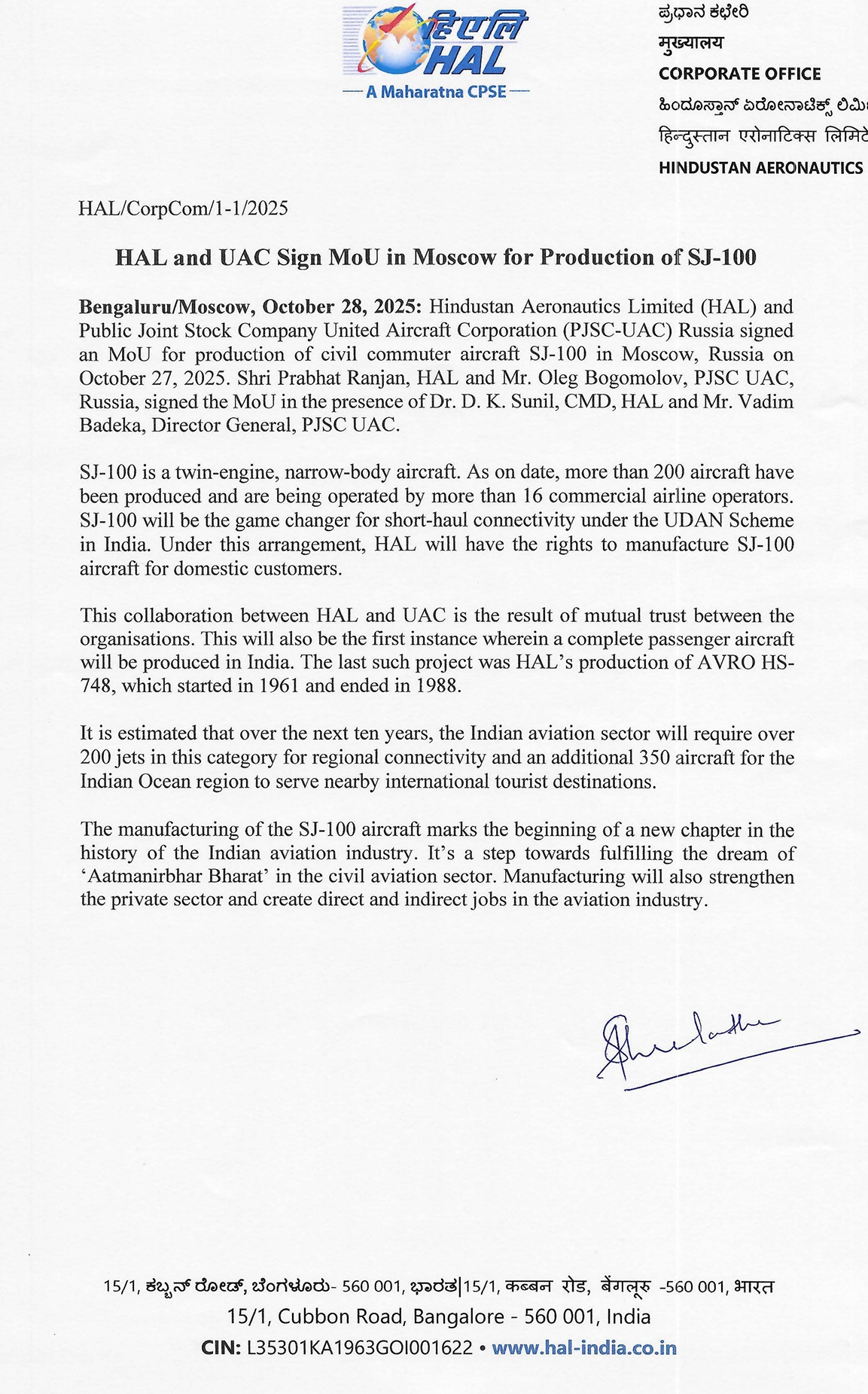
"The manufacturing of the SJ-100 aircraft marks the beginning of a new chapter in the history of the Indian aviation industry," HAL said in the press release.
Indian Defense Minister Rajnat Singh called the conclusion of the agreement a significant step that will change the rules for short-haul flights under the UDAN scheme (aimed at the development of regional airports in India, designed to make flights more affordable for citizens).
In addition, Singh stressed, the production of the SJ-100 will be an important step towards India's self-sufficiency in civil aviation.
"Manufacturing will also strengthen the private sector and create direct and indirect jobs in the aviation industry."
Serial production of the Superjet 100 was stopped in 2022 due to anti-Russian sanctions. In 2026, carriers expect the delivery of an import-substituted version of the liner with a Russian PD-8 engine. The completion of import substitution of engines on Superjet aircraft was announced in early September 2025 by Russian President Vladimir Putin.
In early October, the head of the Federal Air Transport Agency, Dmitry Yadrov, announced the extension of the resource of the Russian-French SaM146 engine, which the SJ-100 is equipped with, that will help the model to continue flying until 2028-2029.
Even though the deal with United Aircraft Corporation is a landmark towards manufacturing a passenger aircraft in India for the first time, this also risks its ties with Western countries, those sanctioned Russia for its invasion of Ukraine.