
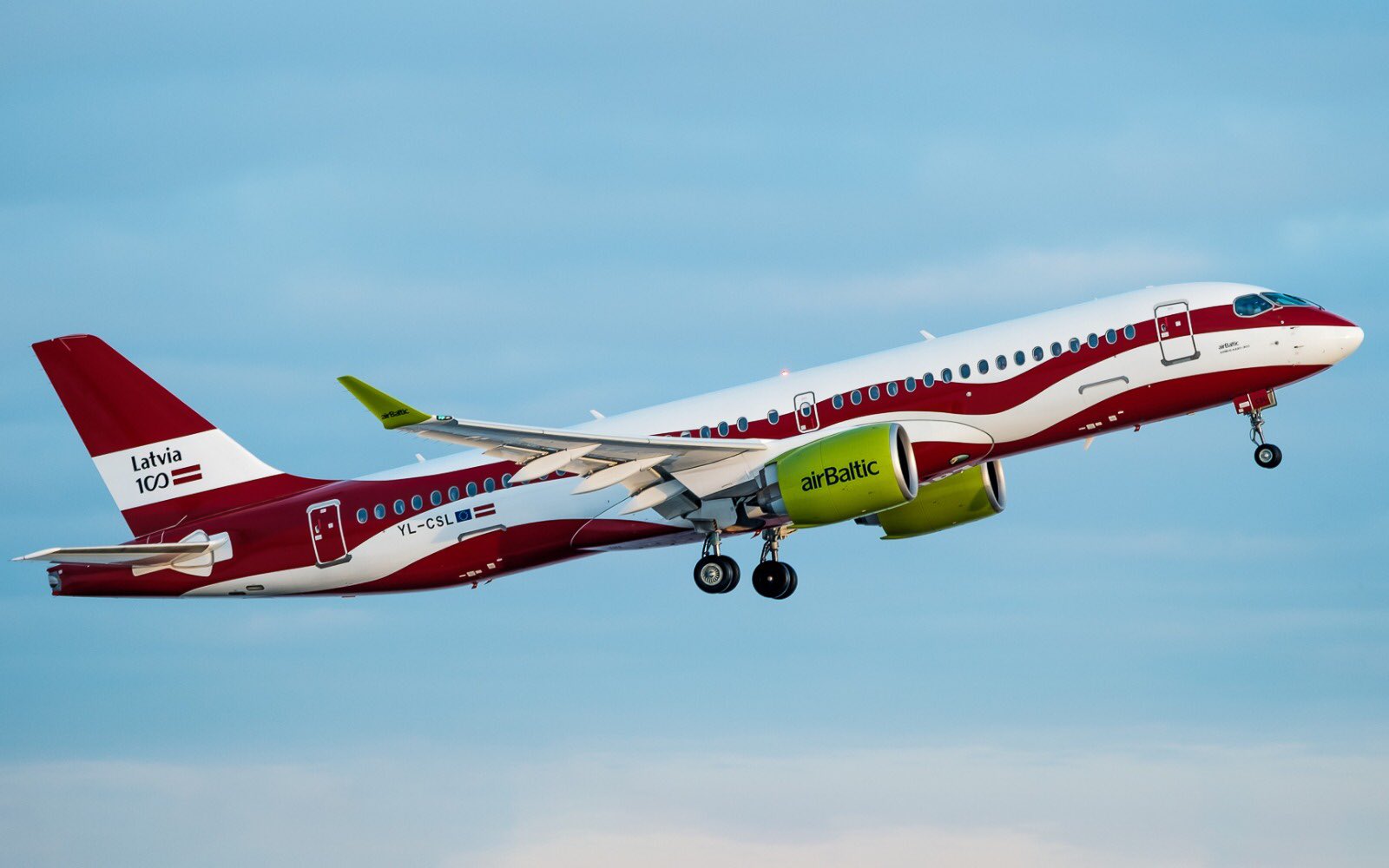
Latvia’s national airline airBaltic has entered U.S. Chapter 11 proceedings in New York as the carrier seeks court protection while restructuring its debt, contracts and wider capital structure.
The move marks the most significant financial restructuring in the airline’s history and comes after several years of state support, pandemic-related losses, major borrowing, fleet and engine challenges, and unsuccessful attempts to secure a sustainable financing structure.
Latvian Prime Minister Andris Kulbergs said the Chapter 11 process addresses what he described as the core problem facing the airline — its debt burden.
“Today, a review of airBaltic’s debt burden is being initiated in a US court under the Chapter 11 procedure; this means we are finally addressing the core of the problem,” Kulbergs said.
The Latvian government said the procedure is intended to provide airBaltic with protection from creditor claims while management implements a restructuring plan developed with strategic and financial adviser Seabury Securities.
Chapter 11 is a U.S. court-supervised restructuring process rather than an automatic liquidation procedure. It can allow an eligible company to continue operating while negotiating with creditors, restructuring obligations and obtaining financing under court supervision.
For airBaltic passengers, the immediate message from the company is that operations will continue.
airBaltic President and CEO Erno Hildén said the airline would continue operating while implementing changes under its new business plan.
“For our passengers, our operations continue as normal – the process does not affect their travel experience and is not noticeable to them – we are flying, selling tickets and planning our future schedule, with the same focus on safety and operational reliability.”
The airline currently operates a fleet of 54 Airbus A220-300 aircraft, serves more than 70 destinations and employed more than 3,000 people at the end of its latest reporting period.
airBaltic is headquartered in Latvia and operates primarily in Europe, meaning the use of a U.S. Chapter 11 process may initially appear unusual.
However, Chapter 11 can be used as a financial restructuring mechanism for companies with international debt, financing and contractual relationships. The relevant issue is therefore not simply where an airline operates flights, but the legal and financial structure surrounding its obligations and creditors.
The New York filing is designed to give airBaltic a centralized framework in which it can negotiate with creditors and other stakeholders while continuing its airline operations.
The process also comes after increasingly difficult negotiations with bondholders.
The Chapter 11 filing follows a rapidly deteriorating financing situation.
airBaltic had been seeking approval for up to €257 million of new super-senior debt, with the new financing receiving repayment priority over existing debt.
The proposed financing would mature in 2027 and was structured with collateral including aircraft and engines. Existing holders of airBaltic's €380 million 2029 bonds faced being pushed lower in the repayment hierarchy. That proposal contributed to a sharp increase in the yields demanded by investors.
Fitch Ratings subsequently warned that airBaltic's options were becoming “quite limited” if stakeholders failed to approve additional funding. The airline was estimated to require at least €156 million in short-term funding to maintain operations.
The bondholder process ultimately failed to provide the sustainable solution sought by the Latvian government, paving the way for the U.S. court restructuring.
As part of the Chapter 11 process, airBaltic has secured approximately €350 million ($405 million) in financing from a group including Strategic Value Partners, Barclays, Hayfin Capital Management, Morgan Stanley and Oaktree Capital Management, according to Reuters.
The financing is intended to provide liquidity while the airline undertakes its restructuring.
The development follows a €30 million state loan in April 2026, highlighting the growing pressure on the airline's liquidity position.
airBaltic's current restructuring cannot be viewed solely as the result of the latest fuel-price shock or geopolitical crisis.
The airline entered the COVID-19 pandemic with an already ambitious fleet and network strategy. The collapse in international travel then caused severe revenue losses and forced governments across Europe to intervene.
In 2020–2022, Latvia provided substantial support to airBaltic. The European Commission approved a €33.4 million recapitalisation in 2022, following earlier state support. At the time, the Commission noted that airBaltic faced a serious risk of default and insolvency and that the Latvian state held approximately 97% of the company following the 2020 recapitalisation.
The Commission also approved €11.6 million in compensation for pandemic-related damage suffered by airBaltic between June 2020 and June 2021.
These interventions helped preserve Latvia's air connectivity and supported the airline through the pandemic, but they also left the company with a complex capital structure that ultimately required further restructuring.
The airline subsequently returned to financial markets.
In May 2024, airBaltic successfully priced a €340 million bond issue, providing additional funding as the company expanded its Airbus A220 operation and prepared for its next phase of growth.
The bond financing was part of a broader strategy to strengthen the airline ahead of a potential public listing.
At the same time, airBaltic was expanding its network and fleet. The carrier celebrated the arrival of its 50th Airbus A220-300 in February 2025, while continuing its strategy of building a modern all-A220 fleet.
A major strategic development came in January 2025, when Germany's Lufthansa Group agreed to acquire a 10% stake in airBaltic for €14 million through convertible shares.
The investment gave Lufthansa a seat on airBaltic's supervisory board and was part of a broader strategy to strengthen Lufthansa's presence in the European market and secure additional aircraft capacity.
The transaction was also closely linked to airBaltic's plans for an IPO.
The airline had hoped to access public capital markets as part of its longer-term financing strategy. However, continuing operational and financial pressures eventually made that path increasingly difficult.
airBaltic's financial difficulties have also been affected by operational constraints.
Like many airlines operating Airbus A220 aircraft, the carrier has faced challenges involving Pratt & Whitney PW1500G engines, including shortages and maintenance requirements that have reduced aircraft availability.
The airline's fleet strategy was built around the A220, but engine-related disruptions meant that some aircraft could not contribute to revenue generation as planned.
Reuters reported that engine shortages, together with other operational pressures and the cancellation of profitable Dubai services, contributed to airBaltic's deteriorating financial position.
The financial situation became significantly more difficult during 2026.
Rising fuel prices associated with the U.S.-Iran conflict added another major cost burden to airlines. Reuters reported that airBaltic's fuel costs had risen sharply, compounding existing structural weaknesses in its balance sheet.
The airline was also dealing with its existing high-yield debt, aircraft leasing commitments and the consequences of engine availability problems.
By September, investors were increasingly concerned about the airline's ability to meet its obligations. Yields on the €380 million 2029 bonds reached record levels ahead of a critical creditor meeting.
The restructuring is being supported by Seabury Securities, which has experience working with European airlines undergoing major financial restructuring.
That experience includes the restructuring of SAS and Norwegian, making Seabury's involvement particularly relevant as airBaltic seeks to reorganize its balance sheet while preserving its core airline operation.
Hildén himself has previous restructuring experience from his work with SAS, according to the Latvian government statement.
The objective is therefore not simply to obtain another emergency loan, but to create a capital structure that can support airBaltic without repeated government intervention.
Kulbergs has made clear that the government does not regard another short-term financing package as a permanent solution.
The Latvian government said negotiations with bondholders, who controlled around 70% of the debt, had been difficult.
A proposed financing package of up to €257 million, reportedly carrying an annual interest rate of approximately 25%, could have addressed immediate liquidity requirements but would not have solved the airline's underlying legacy debt and aircraft lease obligations.
The government's objective is therefore to use the Chapter 11 process to address those obligations comprehensively rather than simply replacing one short-term loan with another.
For Latvia, airBaltic is more than a conventional commercial airline.
The carrier plays a strategically important role in connecting Riga and the Baltic region with the rest of Europe. Latvia's government has repeatedly emphasized airBaltic's importance to national connectivity and the wider economy.
Andrejs Martinovs, Chairman of the airBaltic Supervisory Board, said the court-supervised process provides a framework for reaching agreements with creditors, aircraft lessors and other stakeholders while allowing the airline to continue flying.
“That is the central priority set for the airBaltic Management Board – to keep flying and to maintain Latvia's connectivity.”
The Chapter 11 process is expected to focus on several interconnected issues:
The process does not mean airBaltic disappears from the European aviation market. Instead, the airline is seeking court protection to give management time and legal space to renegotiate its financial obligations.
airBaltic's journey illustrates how an airline can move from government-backed pandemic survival to private capital-market financing, strategic investment and planned IPO — only to return to restructuring when the underlying capital structure proves unsustainable.
The timeline is significant:
The immediate objective is keeping airBaltic flying. The more difficult question is whether the restructuring can finally produce a financially sustainable airline.
airBaltic has already received state support, raised substantial private debt, attracted Lufthansa as a strategic shareholder and pursued an IPO strategy. Chapter 11 now represents another attempt to solve the fundamental mismatch between the airline's operational ambitions and its financial obligations.
For passengers, the message remains reassuring: airBaltic says flights continue, tickets remain valid and normal operations are maintained.
For creditors, investors and the Latvian government, however, the coming months will determine whether the restructuring can turn the Baltic carrier's latest financial crisis into a durable recovery — rather than another temporary solution.
airBaltic's aircraft will continue to fly. The challenge now is ensuring that the balance sheet can keep up with them.
You may like to read.....

.jpg)