
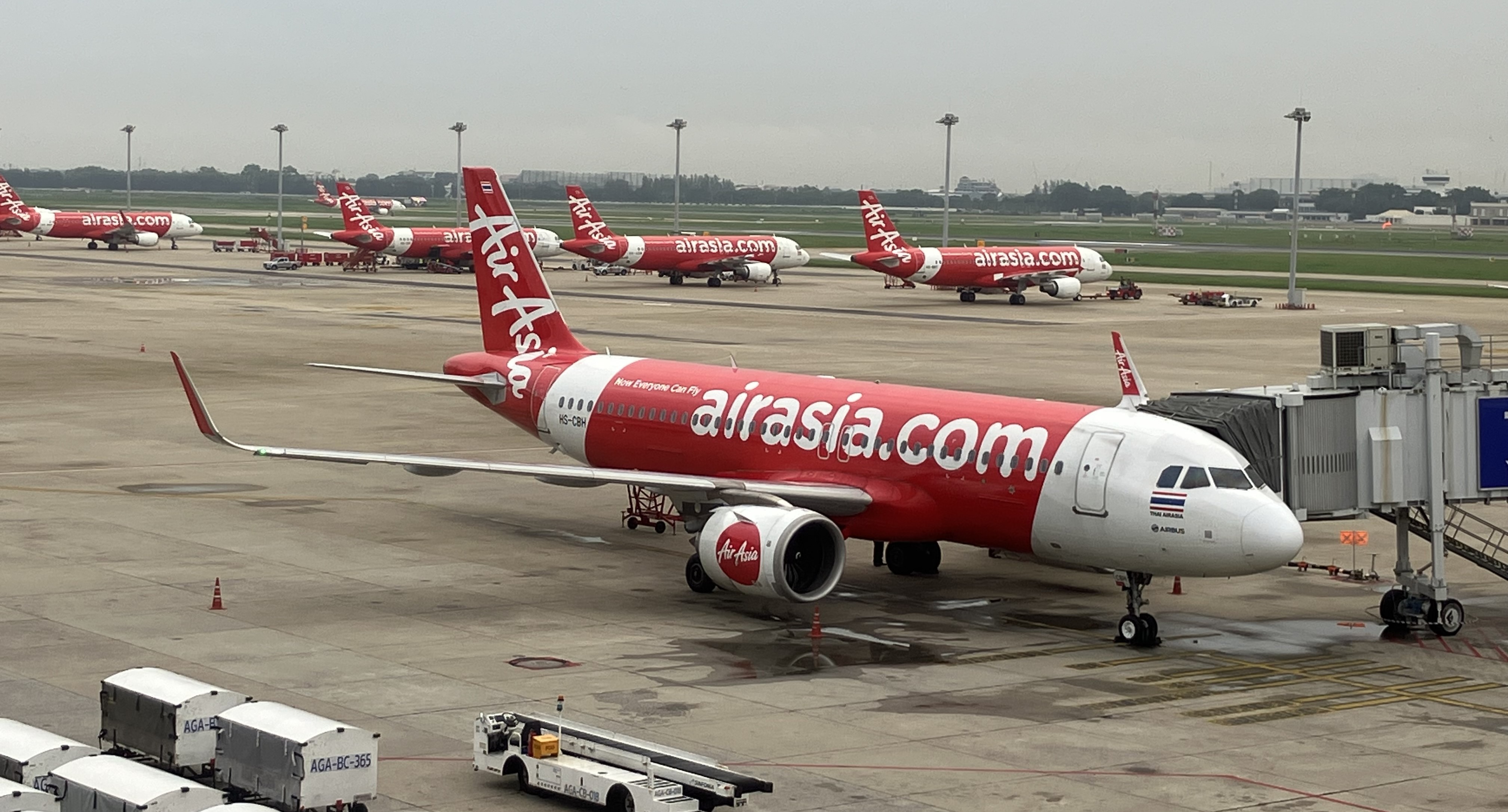
AirAsia’s financial position is once again becoming a major issue for Malaysia’s aviation sector, with the government now examining contingency options should the country’s largest low-cost carrier face further financial pressure.
Malaysia’s government has asked Malaysia Airlines and Batik Air whether they could absorb part of AirAsia’s domestic market, according to people familiar with the matter cited by Reuters. The discussions are described as scenario planning, rather than evidence that AirAsia is preparing to cease operations.
The development highlights how the financial consequences of the pandemic-era aviation crisis have continued to affect AirAsia’s corporate structure and balance sheet, even as the airline has rebuilt its network and returned to growth.
From pandemic collapse to financial restructuring
AirAsia entered the COVID-19 crisis as one of Southeast Asia’s largest low-cost airline groups. The collapse in international and domestic travel during the pandemic, however, placed enormous pressure on the group.
With aircraft grounded and revenue severely reduced, the group's financial position deteriorated. Malaysia’s stock exchange subsequently classified Capital A, the parent company of the AirAsia aviation businesses, under Practice Note 17 (PN17), a designation applied to financially distressed listed companies.
The group spent the following years pursuing restructuring measures while rebuilding its airline operations as travel demand recovered.
An important part of that strategy was separating the aviation business from Capital A’s other operations.
AirAsia’s corporate restructuring
In 2024, shareholders approved a proposed RM6.8 billion acquisition of AirAsia and related short-haul aviation operations by AirAsia X. The transaction was intended to consolidate the group's airline businesses while allowing Capital A to focus on its non-aviation businesses and financial recovery.
That restructuring was completed in 2026, bringing the AirAsia-branded airlines under the AirAsia X structure.
AirAsia X subsequently said it was targeting between US$500 million and US$600 million in debt restructuring, including refinancing initiatives intended to extend maturities, reduce interest costs and consolidate existing debt instruments.
The restructuring created a cleaner corporate structure, but it did not eliminate the underlying financial pressures facing the aviation business.
A new financial challenge: fuel costs
AirAsia is now facing another major external shock.
Jet-fuel prices have surged amid geopolitical tensions, putting renewed pressure on airlines with traditionally thin margins. Reuters reported that AirAsia's average fuel cost rose sharply in the second quarter, adding to the financial burden on the carrier.
For a low-cost airline, fuel is particularly important. The business model depends on high aircraft utilization, strong passenger volumes, and tight control of unit costs. A sudden increase in fuel expenses can therefore put significant pressure on profitability even when passenger demand remains strong.
AirAsia has responded by cutting underperforming routes, returning older aircraft to lessors and renegotiating contracts with suppliers and other vendors.
The numbers behind the concern
The scale of the current pressure is reflected in AirAsia's latest reported figures.
For the quarter ended June 30, AirAsia recorded a net loss of RM831 million, including RM331 million in foreign-exchange losses, according to Reuters.
Its current liabilities stood at approximately RM18.4 billion at the end of June. The airline also owed Malaysia Airports Holdings Berhad (MAHB) at least RM500 million, according to people familiar with the matter cited by Reuters. MAHB has reportedly provided repayment extensions.
AirAsia has been seeking additional financing. The company said it was in discussions with financial institutions for up to US$1 billion in international debt financing, alongside approximately RM700 million in local credit facilities, primarily aimed at restructuring debt.
People familiar with the situation cited by Reuters estimated that AirAsia could require around US$3 billion in fresh capital to stabilize its finances. AirAsia, however, has said its financing targets are sufficient for its requirements and pointed to RM954 million in cash and bank balances as of June 30.
That difference in estimates is significant: it illustrates the uncertainty surrounding the company's financing needs rather than establishing that AirAsia has reached a point of insolvency.
Why Malaysia is preparing for different scenarios
AirAsia is a particularly important part of Malaysia's domestic aviation market.
According to people cited by Reuters, the airline accounts for roughly 60% of domestic flying in Malaysia. That means any significant reduction in AirAsia's capacity could have consequences well beyond the company itself, affecting airport traffic, regional connectivity, fares and aircraft availability.
That is why the government has reportedly opened discussions with Malaysia Airlines and Batik Air.
The two carriers have indicated that they could expand organically into routes and passenger volumes currently served by AirAsia. However, taking over AirAsia's operations on a much larger scale would be more complicated.
One issue is aircraft.
Absorbing passengers and routes without the aircraft needed to operate them would be difficult. According to Reuters, Malaysia Airlines and Batik Air would consider a larger-scale expansion if they could also assume AirAsia aircraft leases.
The discussions therefore appear to be about preparing for multiple possible outcomes rather than announcing a replacement for AirAsia.
Capital raising remains central to AirAsia’s strategy
AirAsia is simultaneously pursuing its own financial solution.
The airline has been working with financial institutions to secure new funding while reducing costs and restructuring existing obligations. The Malaysian government has also considered whether some form of support or endorsement could assist AirAsia in raising capital from external investors, according to Reuters.
The government has reportedly engaged Alton Aviation Consultancy to assess AirAsia's funding requirements.
That suggests policymakers are examining the issue from two directions: supporting the airline's efforts to remain financially stable while preparing contingency options in case those efforts do not produce the required liquidity.
A very different AirAsia from the airline that entered the pandemic
The current situation is easier to understand when viewed against the group's transformation over the past six years.
The pre-pandemic AirAsia was primarily understood as a rapidly expanding low-cost airline group. The post-pandemic organization is considerably more complex.
The aviation businesses have been consolidated under AirAsia X, while Capital A has been repositioned around businesses including aircraft maintenance, logistics, food, and branding.
At the same time, AirAsia X has continued to pursue growth. In 2026, the group has announced ambitious plans for long-haul expansion, including a new Bahrain hub and a return to London via Bahrain.
That creates an unusual contrast: AirAsia is simultaneously restructuring its finances and planning further international growth.
The company has also maintained that its underlying business remains viable. In September, AirAsia said it had raised approximately US$300 million in March 2026 and was using the funds to extend debt tenures and reduce principal obligations.
What happens next?
The immediate question is whether AirAsia can raise enough capital and reduce enough costs to navigate the current period of high fuel prices and financial pressure.
The government's discussions with Malaysia Airlines and Batik Air do not, by themselves, indicate that AirAsia is exiting the market. Instead, they demonstrate the importance of contingency planning when an airline holds such a large share of domestic capacity.
For Malaysia's aviation industry, the stakes are significant.
AirAsia has spent more than two decades helping establish the low-cost model as a dominant force in Southeast Asian aviation. Its network has stimulated demand, connected secondary cities, and transformed how millions of passengers travel across the region.
The latest financial pressures therefore represent more than a corporate balance-sheet story. They raise broader questions about competition, capacity, aircraft availability, airport finances, and connectivity in Malaysia's domestic aviation market.
For now, AirAsia says it remains focused on business continuity and stable operations while pursuing financing and cost-reduction measures. At the same time, the Malaysian government is preparing for alternative scenarios.
The coming months will show whether AirAsia's latest restructuring and fundraising efforts can resolve the financial pressures — or whether Malaysia's aviation market will have to adapt to a substantially different competitive landscape.

.jpg)