
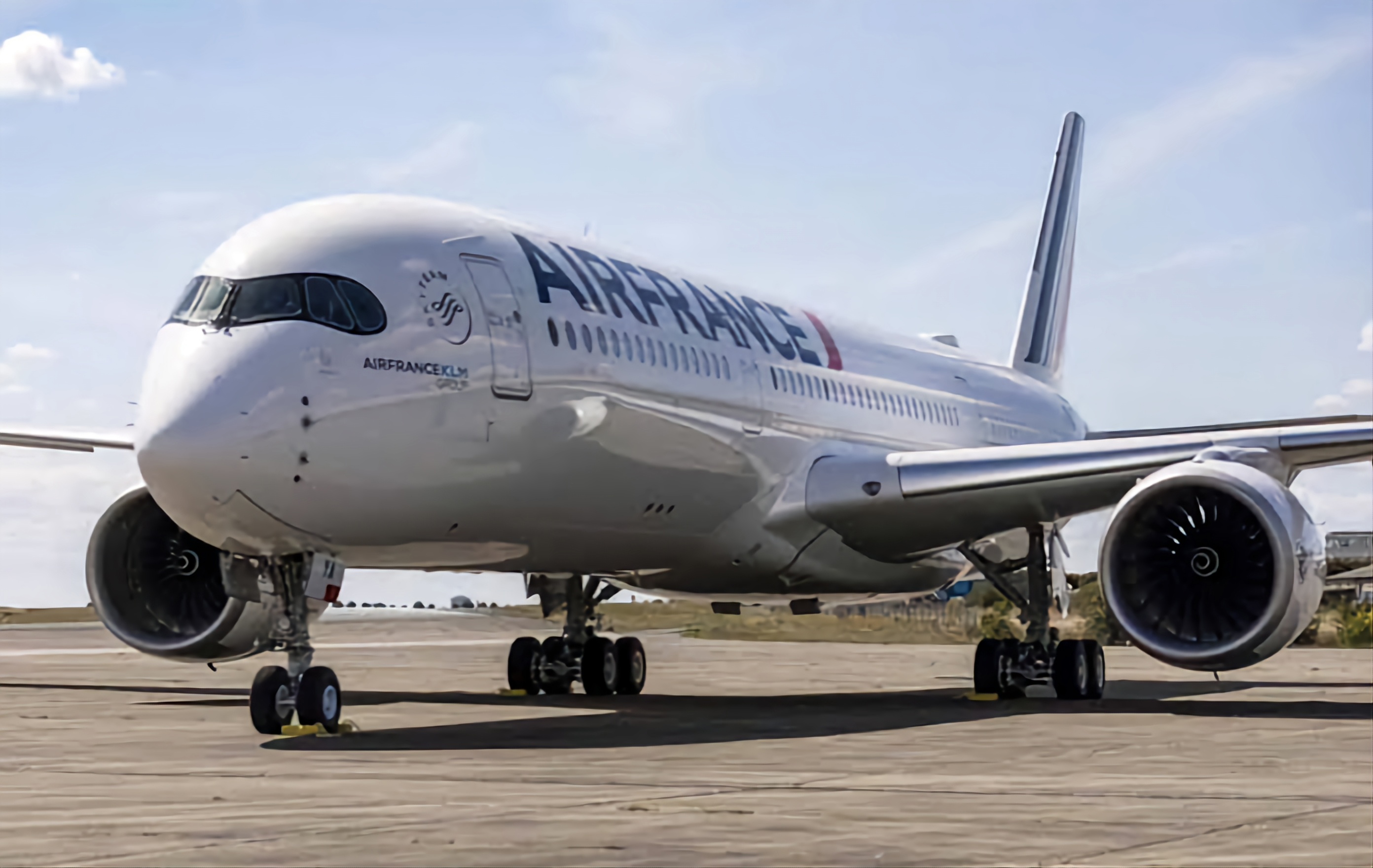
The U.S. Department of Transportation (DOT) has fined Air France and KLM Royal Dutch Airlines a combined $425,000 for operating flights carrying Delta Air Lines’ designator code through airspace subject to U.S. Federal Aviation Administration (FAA) restrictions over Iraq.
Announced on 23 October 2026, the enforcement action concerns more than 130 flights operated between 2022 and 2025 that allegedly failed to comply with an FAA restriction applicable to flights carrying a U.S. airline’s code. Air France received a $105,000 penalty, while KLM was fined $320,000. Both carriers were ordered to cease and desist from similar violations.
The decision is the latest in a series of U.S. regulatory actions against foreign airlines operating codeshare flights in airspace where the FAA has imposed safety restrictions because of military activity, regional conflict or heightened security risks.
According to the DOT, Air France operated more than 30 flights carrying Delta’s airline designator code through the Baghdad Flight Information Region (FIR) between April 2022 and November 2025.
KLM operated more than 100 flights carrying the same code between January 2022 and May 2025.
The Baghdad FIR encompasses Iraqi airspace under the responsibility of the relevant air traffic services authorities. The FAA's restrictions are intended to protect civil aviation from potential threats associated with conflict and militant activity.
Under Special Federal Aviation Regulation (SFAR) 77, codified at 14 CFR 91.1605, U.S. air carriers and commercial operators are prohibited from conducting flight operations in the Baghdad FIR below Flight Level 320, equivalent to approximately 32,000 feet under standard atmospheric pressure conditions.
The restriction was amended and extended in October 2020 and is currently scheduled to remain in effect until 26 October 2027.
Importantly, the rule does not amount to a blanket prohibition on every aircraft flying over Iraq. It establishes a specific altitude restriction for the operators and operations covered by the regulation. The enforcement action against Air France and KLM concerns flights carrying Delta's code that operated contrary to the applicable restrictions.
The case highlights an important aspect of international airline partnerships: codeshare agreements can extend regulatory obligations beyond the airline physically operating an aircraft.
Under a codeshare arrangement, one airline operates a flight while a partner airline markets seats on that service using its own flight number and designator code.
For example, an Air France-operated flight may also be sold under a Delta Air Lines flight number. Although Air France supplies the aircraft and crew, the flight may carry Delta's designator code in reservation systems and on passenger itineraries.
When a foreign airline operates a flight carrying a U.S. carrier's code, U.S. regulatory requirements governing prohibited or restricted airspace can apply to that operation.
The DOT concluded that Air France and KLM violated the conditions of their authority to conduct the relevant foreign air transportation by operating flights carrying Delta's code through airspace in which the FAA prohibited the covered operations.
The department's action therefore addresses not simply where the aircraft flew, but also the regulatory conditions attached to the marketing and operation of flights under a U.S. airline's code.
For international carriers, the consequences extend beyond flight planning. Airlines must ensure that their route planning, operational procedures and commercial partnerships are compatible with the restrictions applicable to their codeshare services.
The case also raises a difficult operational question: what should a flight crew do when an air traffic controller's instruction appears to conflict with a published safety restriction?
According to Reuters, Air France and KLM argued that their flights had been planned to remain above the restricted altitude. They said local air traffic controllers had sometimes instructed crews to descend because of conflicting traffic or had refused permission for aircraft to climb.
The airlines maintained that complying with air traffic control instructions in such circumstances could be necessary for flight safety. They also argued that the flights could qualify for an exemption applicable to emergency situations.
This distinction matters. A crew managing conflicting traffic must consider the immediate safety of the aircraft, passengers and other traffic. At the same time, an airline is responsible for developing operational procedures and route plans that anticipate foreseeable restrictions.
The dispute therefore extends beyond the decisions made by individual pilots. It concerns whether airlines should have taken additional preventive measures after encountering recurring difficulties, such as rerouting flights or removing the U.S. partner's designator code from affected services.
The enforcement action should not be interpreted as evidence that the flights were involved in an accident or that the aircraft were deliberately exposed to hostile fire. Rather, it concerns regulatory compliance with restrictions intended to reduce aviation safety risks.
The penalties announced by the DOT are structured as follows:
The carriers must also cease and desist from similar violations.
According to Reuters' reporting on the orders, $265,000 of the combined penalty is payable within 60 days, while the remaining $160,000 is suspended subject to compliance conditions over a one-year period.
This arrangement means the full amount will not necessarily be collected if the airlines satisfy the conditions attached to the orders. The penalty structure also creates a financial incentive to strengthen compliance procedures and prevent similar incidents.
The official orders are available through the DOT:
These documents provide the formal regulatory basis for the penalties and the cease-and-desist requirements.
The Air France and KLM penalties are not isolated incidents. Over the past several years, the DOT has taken enforcement action against other foreign airlines whose flights carried U.S. airline designator codes through airspace subject to FAA restrictions.
The following cases illustrate how the regulatory approach has developed.
In October 2020, the DOT fined Emirates $400,000 for operating flights carrying JetBlue Airways' code through parts of Iranian airspace where the FAA had prohibited covered U.S. operators from flying.
The investigation found that Emirates operated flights carrying JetBlue's code over the affected region during 19 days in July 2019.
The FAA had issued a prohibition because of heightened military activity and political tensions that created a risk of miscalculation or misidentification involving civil aircraft.
The DOT concluded that Emirates had violated the conditions of its authority to operate the relevant codeshare services.
The case established an important precedent: a foreign airline could face U.S. enforcement action for carrying a U.S. partner's code through restricted airspace, even though the foreign airline itself was operating the aircraft.
Source: U.S. Department of Transportation — Emirates Fined for Operating Flights in FAA-Prohibited Airspace.
In January 2023, the DOT fined Virgin Atlantic $1.05 million for operating flights carrying Delta Air Lines' code through restricted Iraqi airspace between September 2020 and September 2021.
The flights took place while an FAA prohibition applied to U.S. carriers operating over Iraq. The restrictions were introduced amid heightened militia activity and regional tensions.
Virgin Atlantic said the violations were inadvertent and attributed them to operational disruption and staffing difficulties during the COVID-19 pandemic. It said it had previously followed the restrictions and rerouted flights after learning of the violations.
The penalty was structured to allow half the amount, $525,000, to be waived if the airline avoided similar violations for one year.
The case is particularly relevant to the latest action because it also involved flights carrying Delta's code. It demonstrated that the DOT was prepared to hold foreign airline partners accountable for compliance with FAA restrictions attached to codeshare operations.
In 2024, the DOT imposed a further $1.8 million penalty on Emirates over flights carrying JetBlue's code that passed through Iraqi airspace below the altitude permitted under FAA restrictions.
The flights involved operations between the United States and the United Arab Emirates from December 2021 to August 2022.
Emirates maintained that its flight plans called for aircraft to remain above the restricted altitude and that descents occurred when air traffic controllers instructed crews to do so.
The enforcement action followed an earlier $400,000 penalty in 2020 for a different restricted-airspace violation involving Iranian airspace.
Under the 2024 settlement, $300,000 of the penalty could be waived if Emirates complied with the relevant restrictions for one year.
The repeat case demonstrated that earlier enforcement does not necessarily eliminate future regulatory exposure, particularly when an airline's operating procedures continue to encounter the same type of compliance problem.
Source: Associated Press — U.S. Fines Emirates $1.8 Million for Flights That Passed Too Low Over Iraq.
In December 2024, the DOT announced penalties against Ethiopian Airlines and Etihad Airways for flights carrying U.S. airline codes through airspace in which the FAA had prohibited covered U.S. operators from flying.
Ethiopian Airlines was fined $425,000 for flights carrying United Airlines' code between Ethiopia and Djibouti between February 2020 and December 2022.
Etihad Airways received a $400,000 penalty for flights carrying JetBlue's code between the United Arab Emirates and the United States. The relevant operations included flights between August and September 2022, as well as additional flights between January and April 2023.
The department noted that Etihad had been notified about the issue before some of the later flights occurred.
Both airlines were ordered to cease and desist from similar violations.
The cases reinforced the expectation that airlines must respond to regulatory warnings and ensure their commercial arrangements do not result in prohibited codeshare operations.
Source: U.S. Department of Transportation — Ethiopian Airlines and Etihad Airways Penalties.
Later in December 2024, the DOT fined Lufthansa $220,000 and Swiss International Air Lines $200,000 for operating flights carrying United Airlines' code in airspace prohibited to covered U.S. operators.
The department's investigations covered Lufthansa flights between March 2022 and April 2024 and Swiss flights between February 2022 and March 2024.
Both carriers were found to have violated the conditions of their authority to operate the relevant services and were ordered to cease and desist from future similar violations.
The action showed that the issue was not limited to Delta's partnerships. United Airlines' codeshare arrangements were also affected, illustrating the wider implications for transatlantic airline alliances and joint commercial operations.
Source: U.S. Department of Transportation — Lufthansa and Swiss Fines.
Taken together, these enforcement actions point to several important developments in aviation regulation.
First, codeshare compliance is an operational responsibility. Airlines cannot rely solely on the assumption that a route is acceptable because the aircraft is operated by a foreign carrier. The applicable restrictions and the presence of a U.S. airline's code must be considered together.
Second, route planning must account for recurring operational constraints. If air traffic control instructions repeatedly create difficulties in maintaining a required altitude, airlines may need to reassess flight plans, establish alternative routing procedures or reconsider whether a U.S. partner's code should remain on the service.
Third, safety restrictions require coordination between commercial and operational departments. Flight dispatchers, pilots, safety teams, regulatory compliance specialists and codeshare partners all have roles in preventing prohibited operations.
Fourth, the financial consequences can accumulate. Individual penalties may be manageable for large international carriers, but repeated violations can result in further enforcement, additional compliance costs and reputational damage.
Finally, the cases illustrate the distinction between immediate flight safety and broader operational compliance. Pilots must manage the circumstances confronting them in real time, while airlines must establish systems that anticipate foreseeable problems and minimise the likelihood of repeated violations.
The combined $425,000 penalty against Air France and KLM reinforces the U.S. government's position that foreign airlines operating flights under U.S. carrier codes must comply with applicable FAA airspace restrictions.
The historical cases involving Emirates, Virgin Atlantic, Ethiopian Airlines, Etihad Airways, Lufthansa and Swiss show that the issue has become a recurring regulatory concern rather than an isolated dispute.
For airlines serving markets affected by conflict or heightened military activity, compliance requires more than selecting a route that appears safe under normal operating conditions. It also demands continuous monitoring of regulatory notices, realistic assessments of air traffic control constraints and close coordination between operating carriers and codeshare partners.
As restrictions over conflict-affected regions continue to shape international flight planning, airlines will need to ensure that commercial partnerships do not create operational obligations they cannot consistently meet.
The central lesson is clear: airspace risk management and codeshare compliance must be treated as integral parts of flight safety, not merely as administrative or commercial matters.