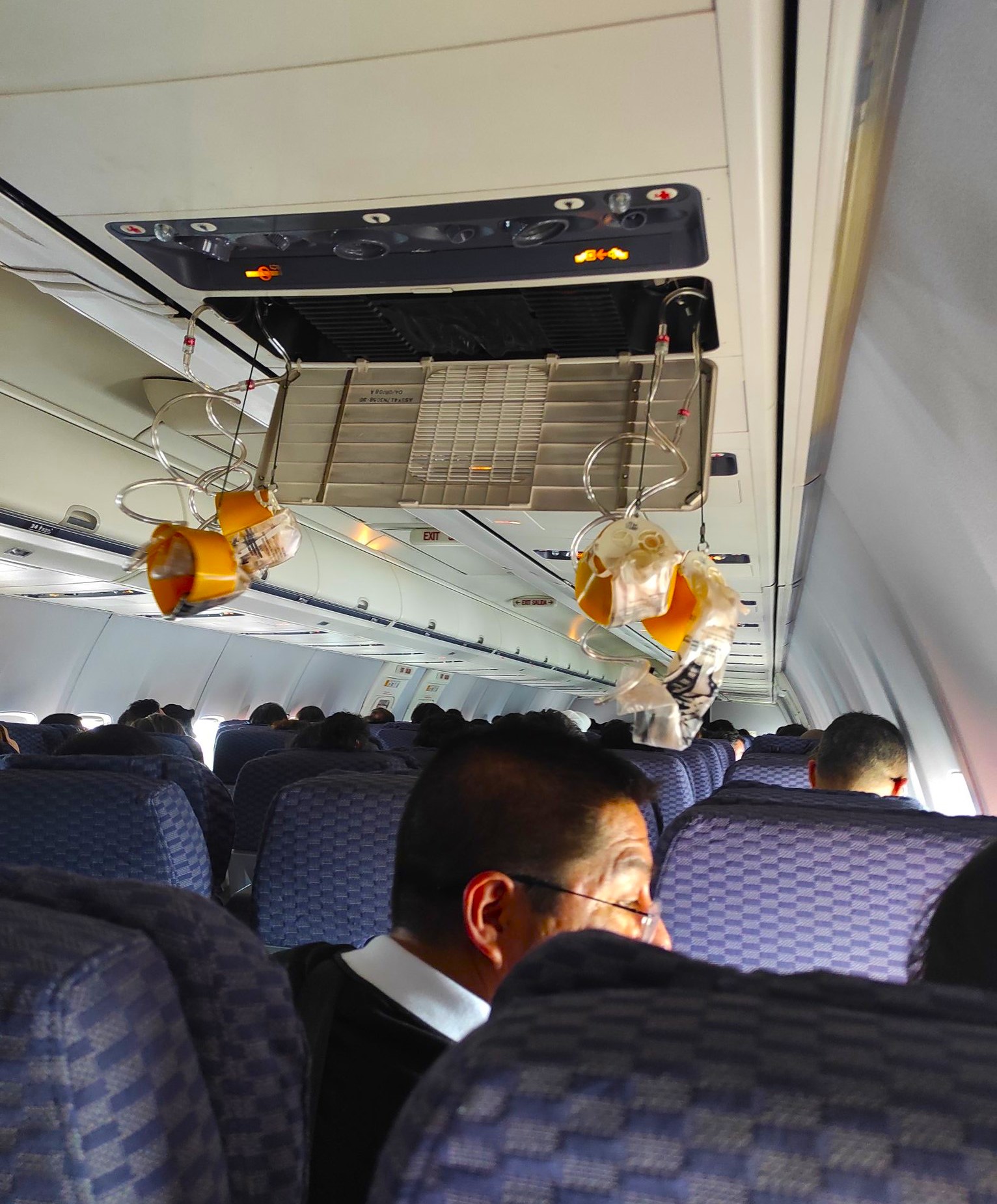

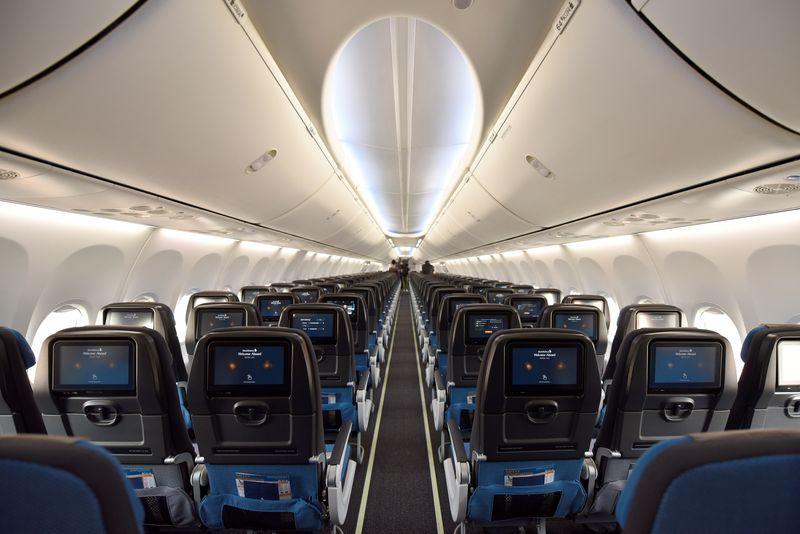
The U.S. Federal Aviation Administration (FAA) has proposed a new Airworthiness Directive (AD) requiring inspections of passenger seat installations on hundreds of Boeing 737 MAX aircraft registered in the United States after identifying a potential safety issue that could increase the risk of injuries during emergency landings.
The proposal (“Docket No. FAA-2026-7228; Project Identifier AD-2026-00040-T”) affects certain Boeing 737-8, 737-9, and 737-8200 aircraft and follows reports that some track-mounted passenger seat assemblies were not correctly installed in the seat tracks. According to the FAA, the improperly installed seats could become disengaged under high loads experienced during severe turbulence or an emergency landing, posing a risk to both passengers and cabin crew.
The airworthiness directive follows the discovery that certain passenger seats were installed incorrectly during production or maintenance, potentially compromising their ability to withstand the forces generated in a crash or other emergency event. While the FAA said it is not aware of any accidents or injuries linked to the issue, the agency determined that corrective action is necessary to maintain compliance with federal safety standards.
According to the FAA, improperly secured or misinstalled passenger seats may not perform as intended during high-impact events, such as emergency landings, runway overruns, or severe turbulence. If the seats fail to remain securely attached to the aircraft floor or do not absorb impact forces as designed, passengers could face an increased risk of injury.
The directive requires operators of affected Boeing 737 MAX aircraft to inspect the seat installations, identify any discrepancies, and carry out repairs or replacements before returning the aircraft to unrestricted service. The inspections are expected to focus on ensuring that seat tracks, attachment fittings, and locking mechanisms meet the manufacturer's specifications.
The FAA's Notice of Proposed Rulemaking (NPRM) states that inspectors received reports indicating that the aft fitting shear plungers on certain passenger seat assemblies were not properly lowered and engaged in the seat tracks. As a result, affected seats may not remain securely attached if subjected to significant forces.
If a seat becomes detached during an emergency landing, it could not only increase the likelihood of passenger injuries but also obstruct the aircraft aisle, potentially delaying evacuation during a critical situation.
"The unsafe condition, if not addressed, could result in injury to passengers and crew during an emergency landing or could block the aisle, which could slow evacuation," the FAA said in the proposal.
If adopted, the directive would apply to 453 Boeing 737 MAX aircraft on the U.S. registry, including the:
The proposed directive references Boeing Special Attention Requirements Bulletin 737-25-1927 RB, dated December 10, 2025, which outlines inspection procedures and corrective actions.
The FAA emphasized that the issue does not represent an immediate threat to the continued safe operation of the aircraft under normal flight conditions. Instead, the concern relates specifically to occupant protection during survivable emergency events.
Commercial aircraft seats are certified to stringent crashworthiness standards and are designed to withstand significant impact forces while protecting passengers from serious injury. Even relatively minor installation errors can reduce the effectiveness of these safety features, making regulatory intervention essential.
The directive is the latest in a series of regulatory actions involving the Boeing 737 MAX, an aircraft that has been subject to increased scrutiny following two fatal accidents in 2018 and 2019. Since the model returned to service after a worldwide grounding, aviation authorities have maintained heightened oversight of manufacturing quality, maintenance practices, and continued airworthiness.
Although the current issue is unrelated to the aircraft's flight-control systems or structural integrity, it reflects the aviation industry's emphasis on identifying and correcting even minor deviations that could affect passenger safety.
Airlines operating the affected aircraft are expected to comply with the FAA directive within the specified timeframe, scheduling inspections during routine maintenance whenever possible to minimize operational disruption.
Boeing is expected to support operators by providing technical guidance and replacement components where necessary. The manufacturer has continued working closely with regulators to address quality-control issues identified across various production programs.
Under the proposed rule, airlines would be required to conduct a detailed inspection of the seat track fittings for every left- and right-side track-mounted passenger seat assembly.
Where discrepancies are identified, operators must correctly reinstall the affected seat assemblies before returning the aircraft to normal service.
The FAA estimates that each inspection would require approximately one labor hour per seat assembly, with an estimated labor cost of $85 per seat. Because a Boeing 737 MAX can have up to 69 track-mounted passenger seat assemblies, the total inspection cost could reach approximately $2.66 million across all affected U.S. operators. Any required corrective installation would also be estimated at $85 per affected seat assembly, although Boeing may cover some costs under warranty.
The FAA is accepting public comments on the proposed Airworthiness Directive until September 10, 2026, under Docket No. FAA-2026-7228. Following the review of comments, the agency will determine whether to issue the directive as a final rule.
Although the issue does not affect the aircraft's flight-control systems or structural integrity, it highlights the importance of cabin safety components that are designed to protect passengers during rare but high-impact events.
Aircraft seats are certified to withstand substantial crash forces, and their secure attachment to the cabin floor is a critical part of occupant protection. Even seemingly minor installation errors can compromise these safety features during emergency situations.
The proposed directive also reflects the FAA's continued oversight of the Boeing 737 MAX family, ensuring that manufacturing, maintenance, and installation practices meet stringent airworthiness standards.
The FAA emphasized that the proposed directive is a preventive safety measure rather than a response to an accident. There have been no reported injuries or accidents linked to the improperly installed seats, but regulators determined that the unsafe condition is likely to exist or develop on other aircraft of the same type design.
If finalized, the directive will require operators to inspect and, where necessary, correct seat installations to ensure passenger seats remain securely attached during severe turbulence or emergency landings, reinforcing the multiple layers of safety built into commercial aviation.
For travelers, the directive serves as a reminder that aviation safety extends well beyond engines, wings, and flight controls. Cabin interiors—including seats, seat belts, emergency exits, and overhead compartments—are all subject to rigorous certification standards designed to maximize passenger protection during emergencies.
Safety experts note that regulatory directives such as this demonstrate how multiple layers of oversight work together to identify potential hazards before they result in accidents or injuries. While the discovery of improperly installed seats may raise questions, the FAA's decision to mandate inspections reflects the aviation industry's proactive approach to maintaining one of the safest modes of transportation in the world.
As airlines complete the required inspections and corrective work, passengers can expect the affected Boeing 737 MAX aircraft to continue operating under the FAA's comprehensive safety oversight framework, ensuring that cabin safety systems perform as intended when they are needed most.
Picture Credit : MarketScreener Espana