
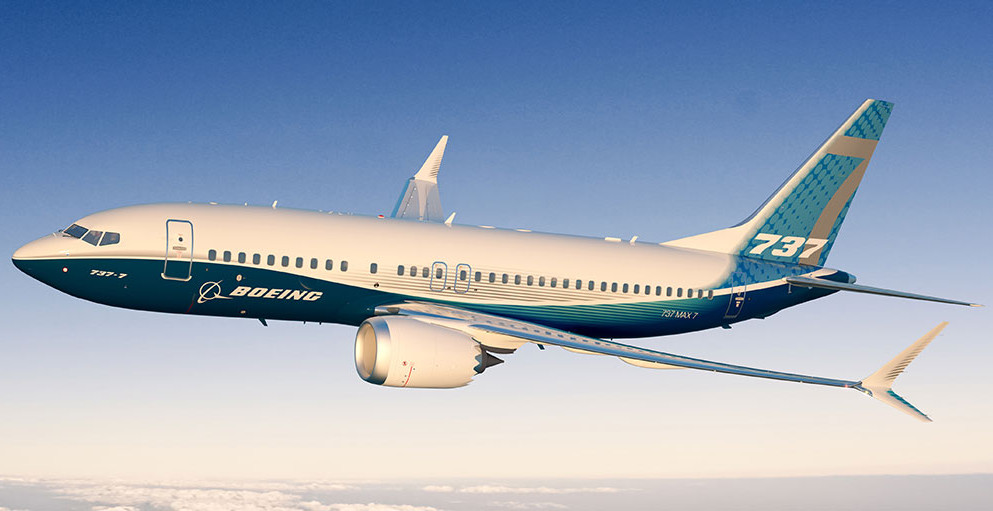
The U.S. Federal Aviation Administration (FAA) has officially certified the Boeing 737 MAX 7, bringing one of commercial aviation's longest-running certification programs to a close and paving the way for deliveries of the smallest member of the MAX family.
The approval, issued on August 3, 2026, ends nearly a decade of development, regulatory scrutiny, and technical redesigns that repeatedly delayed the aircraft's entry into service. While certification represents a major milestone for Boeing, airlines will still require several months to complete aircraft deliveries, crew training, and operational preparations before the MAX 7 carries its first scheduled passengers, now expected in early 2027.
The 737 MAX 7 was originally envisioned as the direct successor to the Boeing 737-700, offering airlines improved fuel efficiency while preserving the operational flexibility that made the Next Generation (NG) series popular among low-cost carriers.
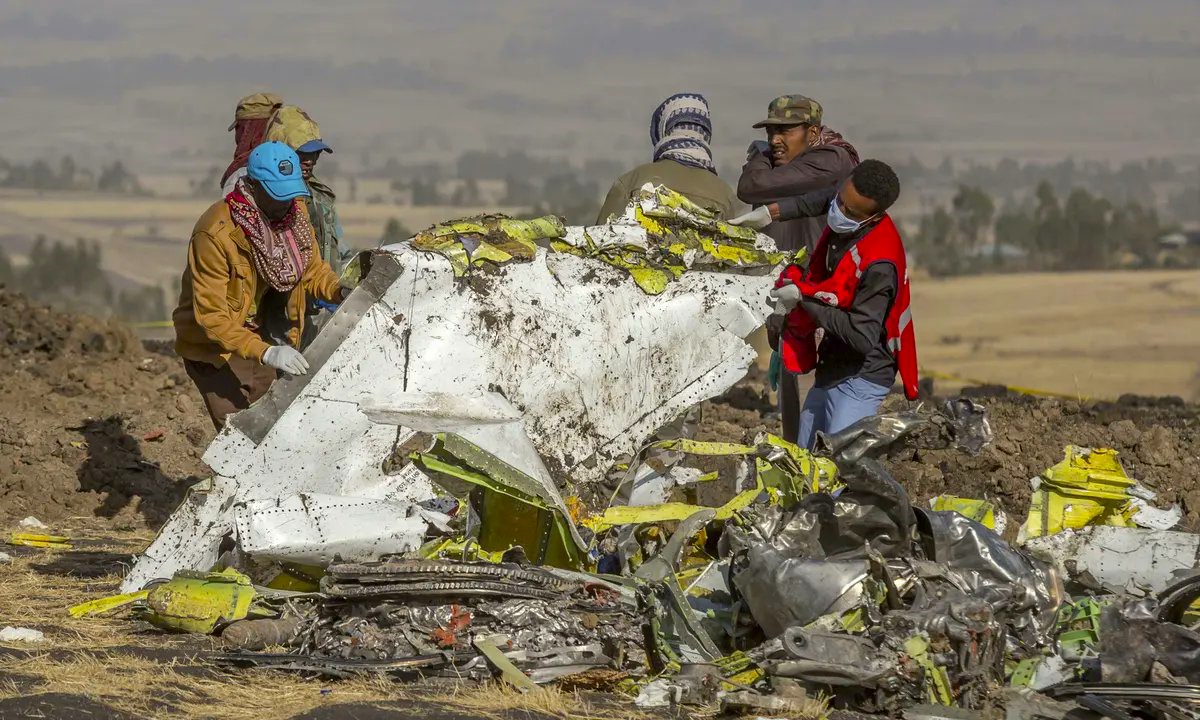
However, its path to certification became increasingly complex following the two fatal crashes involving the 737 MAX 8 in 2018 and 2019.
The accidents involving Lion Air Flight 610 and Ethiopian Airlines Flight 302 led to the worldwide grounding of the entire MAX family for nearly two years and fundamentally changed how the FAA certifies transport-category aircraft.
Congress subsequently enacted the Aircraft Certification, Safety and Accountability Act of 2020, introducing significantly stricter certification requirements, greater FAA oversight, and new cockpit alerting standards for future aircraft certifications.
Although the MAX 8 returned to service in late 2020, and the MAX 9 and MAX 10 continued development, certification of the MAX 7 became increasingly intertwined with evolving regulatory requirements and additional engineering work.
To secure FAA approval, Boeing was required to incorporate several significant design modifications beyond those originally planned for the aircraft.
Among the mandated updates were:
The engine anti-ice issue became one of the program's most closely watched technical challenges after engineers determined that prolonged use under certain conditions could create excessive heat within the engine nacelle.
Resolving the issue required additional redesign work, extending certification well beyond Boeing's original timeline.
Unlike many newly certified aircraft programs, the MAX 7 enters service with a fleet already built.
Approximately 30 aircraft have been assembled and placed into storage, awaiting certification before receiving final retrofits and customer-specific modifications.
Now that regulatory approval has been granted, Boeing can begin completing those aircraft for delivery.
The certification also allows production planning to become more predictable after years of uncertainty surrounding the smallest MAX variant.
The certification is particularly significant for Southwest Airlines, which is both the launch customer and by far the largest MAX 7 customer.
The Dallas-based carrier holds the majority of the 282 firm outstanding orders for the aircraft and intends to use the type as the long-term replacement for its aging fleet of Boeing 737-700s.
For Southwest, the MAX 7 offers a combination of lower fuel burn, improved operating economics, and fleet commonality with its existing 737 operations.
Although the aircraft seats fewer passengers than the MAX 8, its range and operating performance make it particularly well suited for Southwest's extensive domestic network and operations from airports with performance constraints.
While attention has largely focused on the larger MAX 8 and MAX 9, the MAX 7 occupies an important niche within Boeing's product strategy.
Configured for roughly 138 to 153 passengers depending on airline layout, the aircraft competes with the Airbus A220-300 and smaller members of the Airbus A320neo family.
For airlines operating large fleets of earlier-generation 737-700s, the MAX 7 provides a relatively seamless transition with lower fuel consumption, reduced emissions, and common pilot type ratings.
Its certification also strengthens Boeing's narrowbody portfolio at a time when Airbus continues to enjoy a significant order lead across the single-aisle market.
Certification marks the end of one phase—but not the beginning of commercial service.
Before passengers board the MAX 7, Boeing must complete customer-specific aircraft modifications, airlines must formally accept deliveries, pilots and maintenance personnel require additional training, and carriers must integrate the aircraft into their operational schedules.
For Southwest, introducing a new fleet subtype will involve updating flight planning systems, maintenance programs, spare parts inventories, and crew scheduling before the aircraft enters revenue service.
As a result, the first scheduled passenger flights are not expected until early 2027, despite certification now being complete.
The MAX 7's approval represents another important step in Boeing's gradual recovery following one of the most challenging periods in the company's history.
Since the worldwide grounding of the MAX family, Boeing has worked to restore confidence through software redesigns, enhanced pilot training, more rigorous certification processes, and increased regulatory oversight.
The company has also faced additional scrutiny in recent years following manufacturing quality concerns affecting both the 737 and 787 programs, prompting closer FAA oversight of production and quality-control systems.
Against that backdrop, the FAA's certification of the MAX 7 demonstrates that the aircraft has satisfied the regulator's current safety requirements after years of engineering revisions and exhaustive testing.
While certification concludes one of Boeing's longest certification campaigns, the aircraft's true success will ultimately be measured by its operational performance once it enters airline service.
For Southwest Airlines—the aircraft's largest customer—the decision also unlocks a fleet renewal strategy that has been on hold for years, allowing the carrier to begin replacing older 737-700 aircraft with a more efficient successor.
After nearly a decade of delays, the Boeing 737 MAX 7 is finally ready to move from certification program to commercial airline fleet.


.jpg)