
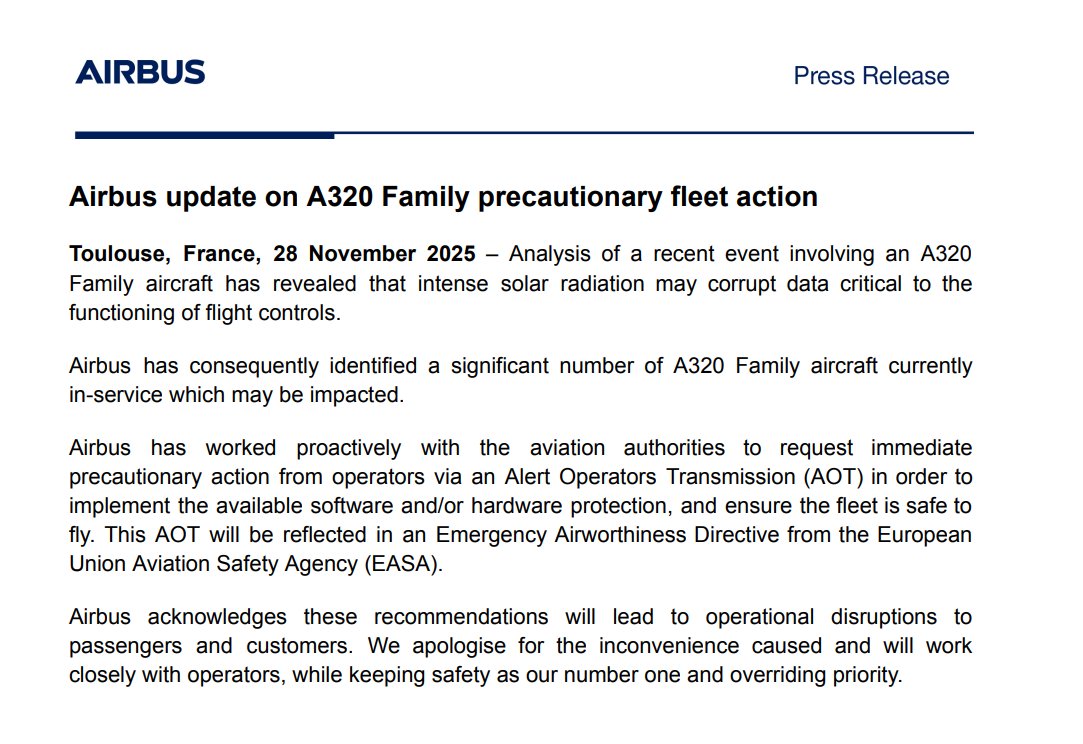
European manufacturer Airbus has announced on Friday the order to make an immediate software change in a considerable part of its fleet of A320 family aircraft, the company's best-seller. According to sources in the sector, this measure will affect some 6,000 aircraft, which represents more than half of the global fleet of this model.
Airbus instructed the immediate software update of a large number of A320 Family aircraft, after detecting an incident related to flight control, an emergency recall of A320 series aircraft worldwide, more than half of the global fleet, marking one of the largest maintenance operations in the company's 55-year history.
According to sources in the sector, the measure could involve around 6,000 aircraft, which represents more than half of the operational fleet in the world.
The reason is that recent intense solar flares may have interfered with the elevator and aileron computer (ELAC), leading to damage in critical flight control data.
The adjustment must be applied before the next scheduled flight, according to a bulletin sent to airlines.
A situation that could generate delays or cancellations during one of the weekends with the highest demand for travel in the United States and other countries.
In a statement, Airbus explained that a recent incident in one of its aircraft has revealed that intense solar radiation can corrupt data critical to the operation of flight controls. The company has admitted the impact that this decision will have, stating that "Airbus recognizes that these recommendations will cause operational disruption to passengers and customers".
It is known that the incident that triggered this decision occurred on October 30, on a JetBlue flight that covered the Cancun-Newark route.The plane abruptly lost altitude, injuring several passengers and forcing an emergency landing in Tampa, Florida. The FAA is already investigating what happened; Neither the airline nor the agency have given statements.
Airbus said the European Aviation Safety Agency will issue an emergency directive to formalize the order.
In most cases, fixes will consist of reverting to a previous version of the software, which would take little time.
However, hundreds of planes could require hardware changes, which would imply longer waits, especially considering the high demand in maintenance workshops and the number of Airbus aircraft that remain idle for engine repairs.
Internationally, cancellations and delays have been reported from the Philippines to Colombia. The airlines affected are reorganizing their schedules and mobilizing replacement aircraft.
After the announcement, some 3,000 A320 aircraft were flying around the world. American Airlines and Wizz Air have already identified which units will require the upgrade; United Airlines confirmed that it was not affected.
American said about 340 of its 480 A320s need modification and expects to finish most in a day or two, with an estimated time of two hours per aircraft.
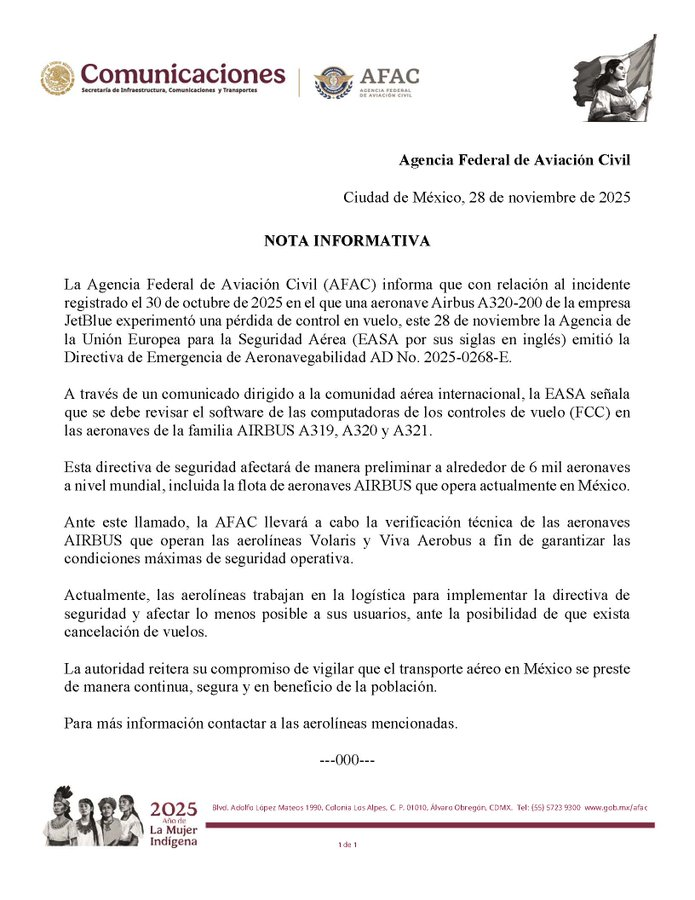
The Federal Civil Aviation Agency of Mexico reported on this November 28 that, following the incident on October 30, 2025, when a JetBlue A320-200 aircraft lost control in mid-flight, it will conduct a technical verification of the Airbus aircraft operated by Volaris and Viva Aerobus to ensure their maximum operational safety.
Avianca said in a statement that "Due to an urgent software update required by Airbus (manufacturer of much of our fleet), our operations will be significantly affected between November 29 and December 8."
In Paris, seven flights were cancelled in the morning to Nice, Bordeaux, Toulouse, Venice, Madrid and twice to Casablanca. According to Air France, these flights were suspended on Friday evening.
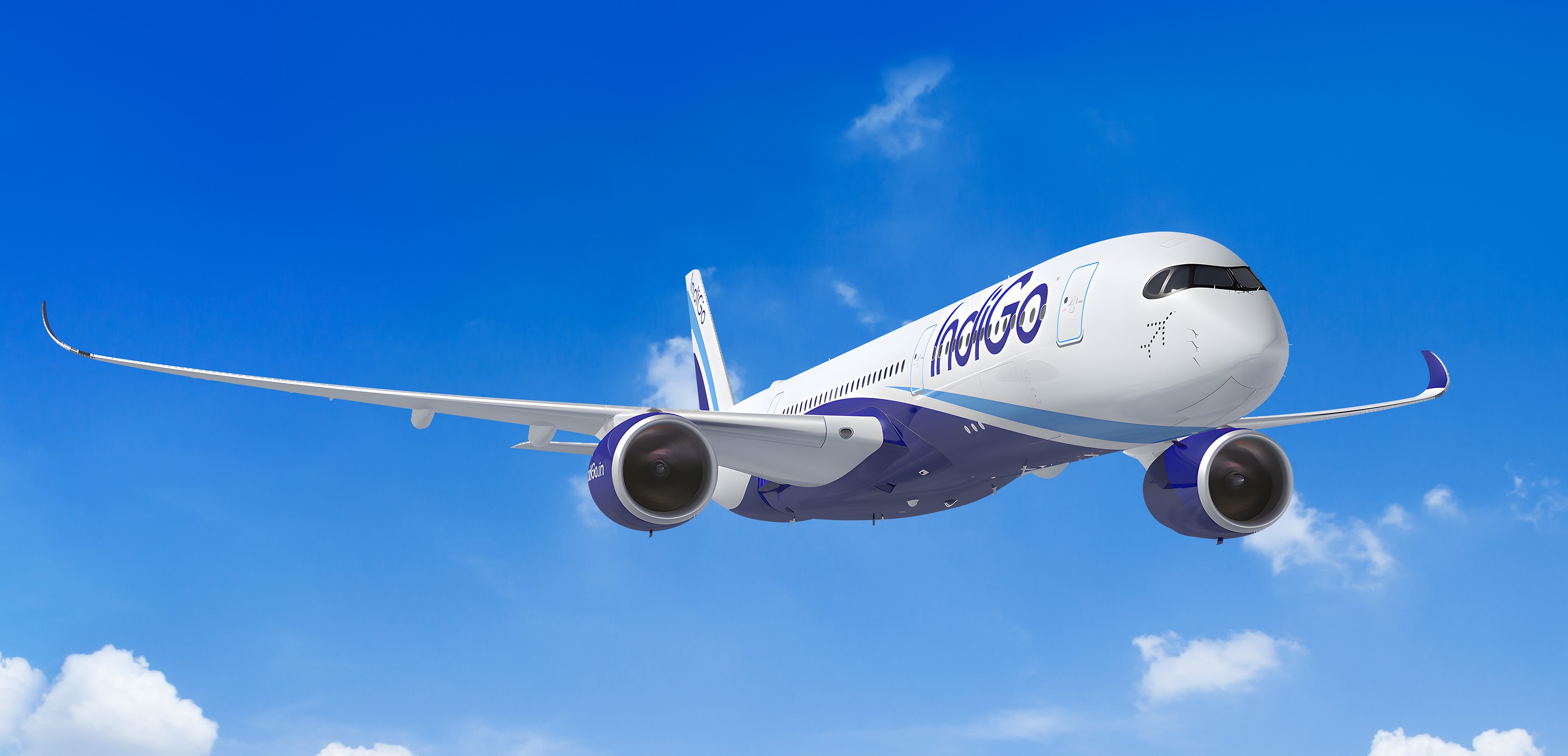
For their part, Indigo and Air India (two of India's main airlines) have warned of delays due to the grounding of some aircraft.
In total, there are around 11,300 Airbus A320 family aircraft operating globally, including 6,440 for the original model (CEOs) launched in the year 1987.


.jpg)