
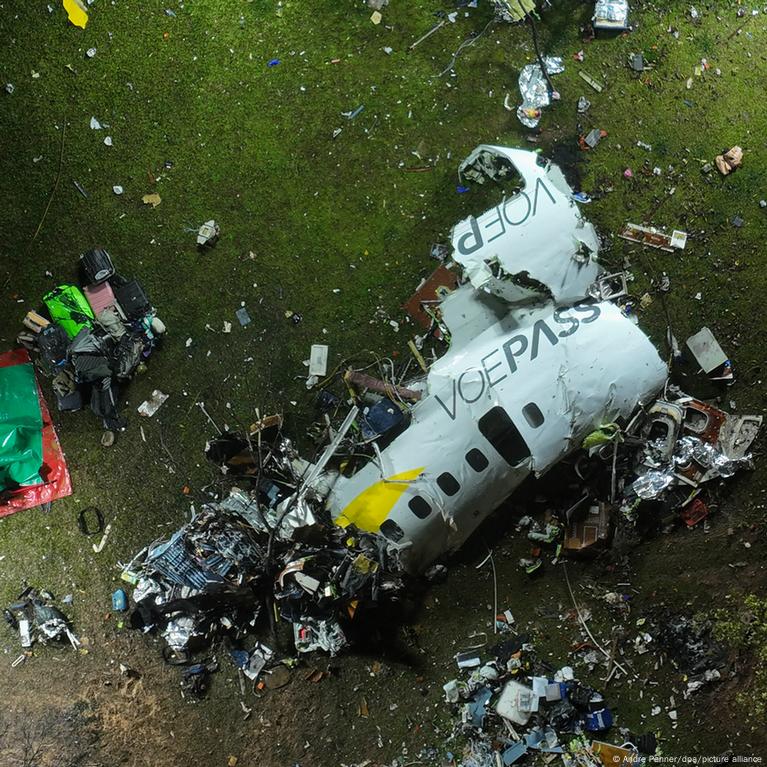
The Brazilian Aeronautical Accident Investigation and Prevention Center (Cenipa) has released its long-awaited final report into the crash of Voepass Flight 2283, revealing that known technical issues with the aircraft's anti-icing system, operational decisions, and organizational shortcomings contributed to the chain of events that led to Brazil's deadliest aviation accident in nearly two decades.
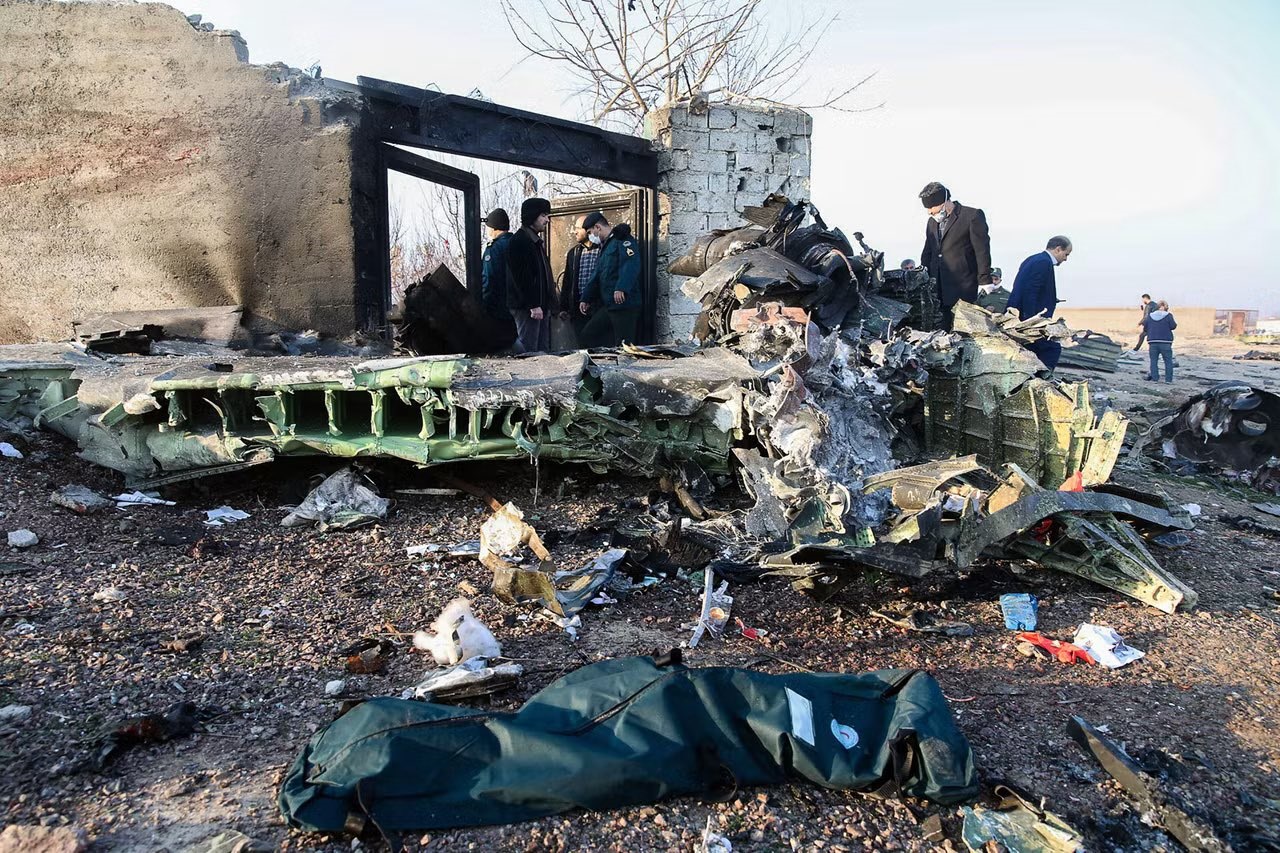
The ATR 72-500, registered PS-VPB, crashed near Vinhedo, São Paulo, on August 9, 2024, while operating a scheduled flight from Cascavel to São Paulo/Guarulhos International Airport. All 62 people on board—58 passengers and four crew members—lost their lives.
Although the report does not assign legal responsibility, it identifies multiple safety deficiencies involving the airline, the flight crew, regulatory oversight, and aircraft manufacturer ATR. The findings have already prompted changes to aircraft maintenance procedures, onboard monitoring systems, and new safety recommendations for the global ATR fleet.
One of the report's key findings is that the aircraft's de-icing system had experienced intermittent malfunctions before the accident flight.
Investigators determined the system had already shown faults during the aircraft's previous sector between Guarulhos and Cascavel. Despite these recurring issues, the aircraft was returned to service.
According to cockpit voice recorder transcripts, the flight crew was aware of the malfunction and discussed strategies to minimize the risk of ice accumulation during the flight.
Risk management specialist Gerardo Portela noted that the pilots considered flying at a lower altitude, where icing conditions would have been less severe. However, the aircraft ultimately remained at an altitude conducive to ice accumulation.
The report also concludes that the aircraft should not have departed in its existing technical condition, raising concerns about maintenance decisions and operational risk assessment.
Rather than attributing the accident to a single cause, Cenipa described a sequence of interconnected failures involving several layers of the aviation system.
According to the investigation, contributing factors included:
The report also highlights what investigators described as a "culture of normalization of deviations" within the airline, suggesting that repeated operational irregularities had gradually become accepted as routine.
The Brazilian Aeronautical Accident Investigation and Prevention Center (Cenipa) has concluded that shortcomings in the National Civil Aviation Agency's (ANAC) oversight contributed to the conditions that allowed Voepass to continue operating despite deteriorating safety standards.
According to Cenipa's final report on the Voepass Flight 2283 accident in Vinhedo, deficiencies in ANAC's risk management framework meant that known safety concerns were not effectively translated into regulatory action.
Investigators found that safety issues previously identified during inspections were not adequately incorporated into the agency's formal risk assessment process. At the time leading up to the accident, ANAC's systems for monitoring, processing, and managing operational safety data were still undergoing development.
During the presentation of the report in Brasília, Lieutenant Colonel Paulo Mendes Fróes stated that the lack of effective decision-making tools for mitigating operational risks allowed the airline to continue flying even as its safety performance declined.
"The lack of adequate support for risk mitigation and control decisions allowed the company to maintain its operations even in the face of degraded safety levels," Fróes said.
Cenipa identified four principal shortcomings in the regulator's oversight of the airline:
The report emphasizes that these findings are intended to improve aviation safety and strengthen regulatory oversight, rather than assign legal responsibility for the accident.
Following the accident, French regional aircraft manufacturer ATR introduced several safety improvements affecting its global fleet.
ATR revised the Aircraft Maintenance Manual (AMM) to improve procedures for removing and reinstalling the left elevator position sensor (syncro transmitter).
During the investigation, experts found that this component had previously been installed incorrectly on the accident aircraft. Although investigators determined that the installation error did not directly contribute to the crash, ATR modified its maintenance documentation to reduce the likelihood of similar mistakes occurring in the future.
ATR also developed Version 2.0 of its Aircraft Performance Monitoring (APM) software, which has since been certified by the European Union Aviation Safety Agency (EASA).
The updated software introduces several improvements, including:
Investigators noted that eliminating the previous "flickering" behavior is intended to reduce the risk of pilots becoming desensitized to recurring caution messages.
In addition to the manufacturer's changes, Cenipa issued several recommendations to EASA aimed at further strengthening ATR aircraft safety.
The recommendations include:
Cenipa conducted one of the most comprehensive aviation accident investigations in recent Brazilian history.
The inquiry included:
Investigators also analyzed cockpit warning lights and aircraft system components to determine the exact sequence of events during the final moments of the flight.
Cenipa emphasized that its report is intended solely to improve aviation safety and does not determine civil or criminal liability.
A separate investigation by the Brazilian Federal Police remains ongoing and will determine whether any criminal offenses contributed to the accident. That investigation remains under judicial seal and is expected to conclude in the coming weeks.
Voepass described the accident as the most difficult event in the airline's history and reiterated its commitment to supporting victims' families while cooperating fully with investigators.
The airline stated that its crews were experienced, properly trained, medically certified, and operated in accordance with international aviation safety standards. It also reaffirmed its commitment to transparency throughout the investigation.
Beyond identifying the factors behind the tragedy, Cenipa's final report has already led to tangible changes in ATR aircraft maintenance procedures, flight monitoring systems, and operational guidance.
The findings reinforce the importance of rigorous maintenance practices, effective management of icing conditions, and timely response to cockpit warnings. As ATR implements these modifications across its global fleet and regulators evaluate additional recommendations, the lessons learned from the Vinhedo accident are expected to influence regional airline safety standards for years to come.
Aircraft manufacturer ATR has introduced significant upgrades to its Aircraft Performance Monitoring (APM) system with the release of APM Version 2.0, which has been certified by the European Union Aviation Safety Agency (EASA). The updated software improves how the aircraft monitors performance and provides safety alerts to flight crews, particularly during operations in icing conditions.
Update: APM Version 2.0 now continuously monitors aircraft performance throughout every phase of flight.
Benefit: Unlike the previous version, the system no longer relies on the detection of icing conditions before monitoring performance. It provides uninterrupted analysis, allowing crews to receive alerts whenever performance degradation is detected.
Update: The system now determines when to trigger speed-related warnings based on the aircraft's margin above VmLbO Icing (ICING BUG)—the minimum safe operating speed in icing conditions.
Benefit: This replaces the earlier Version 1.0 methodology, which generated Cruise Speed Low and Degraded Performance alerts using theoretical indicated airspeed (IAS_TH). The revised logic provides warnings that more accurately reflect the aircraft's operational safety margins.
Update: Cockpit warnings and alerts now remain displayed for a minimum of 60 seconds, even if the triggering condition disappears sooner.
Benefit: The change serves two important purposes:
Related article........