

Brazilian President Luiz Inácio Lula da Silva is considering acquiring a new aircraft for official presidential transportation, but the decision is getting hampered by the high cost of the aircraft, estimated at between R$ 1.4 billion and R$ 2 billion according to market prices, and the potential political fallout in an election year, a scenario that leads allies to advise against the change.
Although the Ministry of Defense and the Air Force are close to completing the price survey phase, the project faces significant obstacles, ranging from high market costs to the potential negative impact on the government's image in an election year. The expectation is that the detailed budget will be submitted to the Executive branch for review in early 2026.
The need for a new model is advocated by the president and the first lady, Janja da Silva, who point to limitations in the current aircraft. Among the improvements requested are greater flight range for international routes, spaces prepared for business meetings, restricted access (VIP) areas, and more comfortable sleeping accommodations for the couple.
The initiative also arises following recent technical issues in official flights, such as failures and forced landings. The most recent incident occurred in early October in Pará.
According to the president himself, an engine failure before takeoff forced the delegation to change aircraft. The aircraft involved in the incident is one of 11 C-105 Amazonas model aircraft operated by the Brazilian Air Force.
Besides advocating for a plane with greater range for international flights, more space for meetings, a VIP area, and a larger cabin with a bed, the change is seen as a safety measure, following at least three risky incidents on official flights during this term.
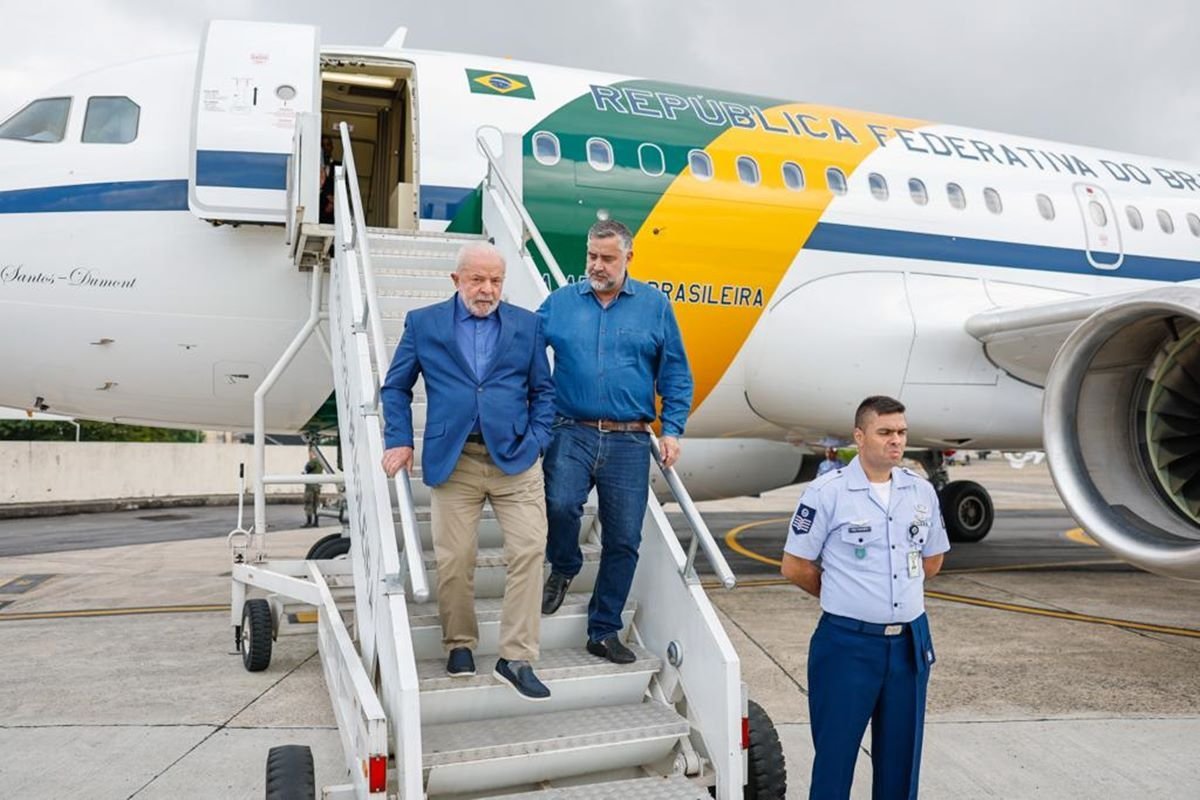
Another embarrassing episode occurred in March of this year, when the presidential plane, the Airbus A319CJ, known as Aerolula, had to abort its landing attempt at Sorocaba airport, in the interior of São Paulo. Before that, in October 2024, Aerolula suffered a malfunction in Mexico after one of its turbines, an essential engine component, failed.
The incident was the last straw for the president, who felt his life had been in danger and reopened the debate within the government about the need for a more modern aircraft.
However, finding a unit that combines all these characteristics has been a complex task. The Air Force commander, Marcelo Kanitz Damasceno, is facing difficulties in obtaining quotes from abroad for aircraft that meet the requirements of the Presidential Palace.
The scarcity of this type of aircraft on the international market is one of the obstacles to purchase, which can take months to complete due to the specific manufacturing requirements. The production of luxury aircraft adapted for world leaders is limited and does not keep pace with global demand.
According to Marcelo Kanitz Damasceno, commander of the Air Force, the global supply of aircraft configured for heads of state is scarce and does not meet current demand.
This scenario could extend the purchase timeline by months, as customized adaptations would be necessary. In 2024, there was an inquiry about used aircraft in Germany, including one used by former Chancellor Angela Merkel, but the negotiations did not proceed.
Market projections indicate that the investment could range between R$1.4 billion and R$2 billion. This amount is considered high during a period of deteriorating public finances and increased government spending.
Not a smooth task, there is concern that the purchase will be formalized precisely in the second half of 2026, coinciding with the election campaign period and Lula's likely bid for re-election.
Another point of conflict lies in the relationship with the Armed Forces. The Defense budget for next year is set at R$ 141 billion, of which R$ 108 billion is already committed to personnel costs. In a context of limited resources for this category, the billion-dollar expenditure on a presidential plane could increase discontent among the military.
The logistics of travel during the campaign also factor into the strategic calculation. According to current regulations, Lula is required to use Brazilian Air Force (FAB) aircraft and have the support of the Institutional Security Office (GSI), even for campaign-related events.
In these cases, the Workers' Party (PT) is responsible for reimbursing public funds for transportation costs, reporting such expenses to the Superior Electoral Court (TSE). A more technologically advanced and larger aircraft would inevitably increase these operational costs to be paid by the party.

.jpg)