
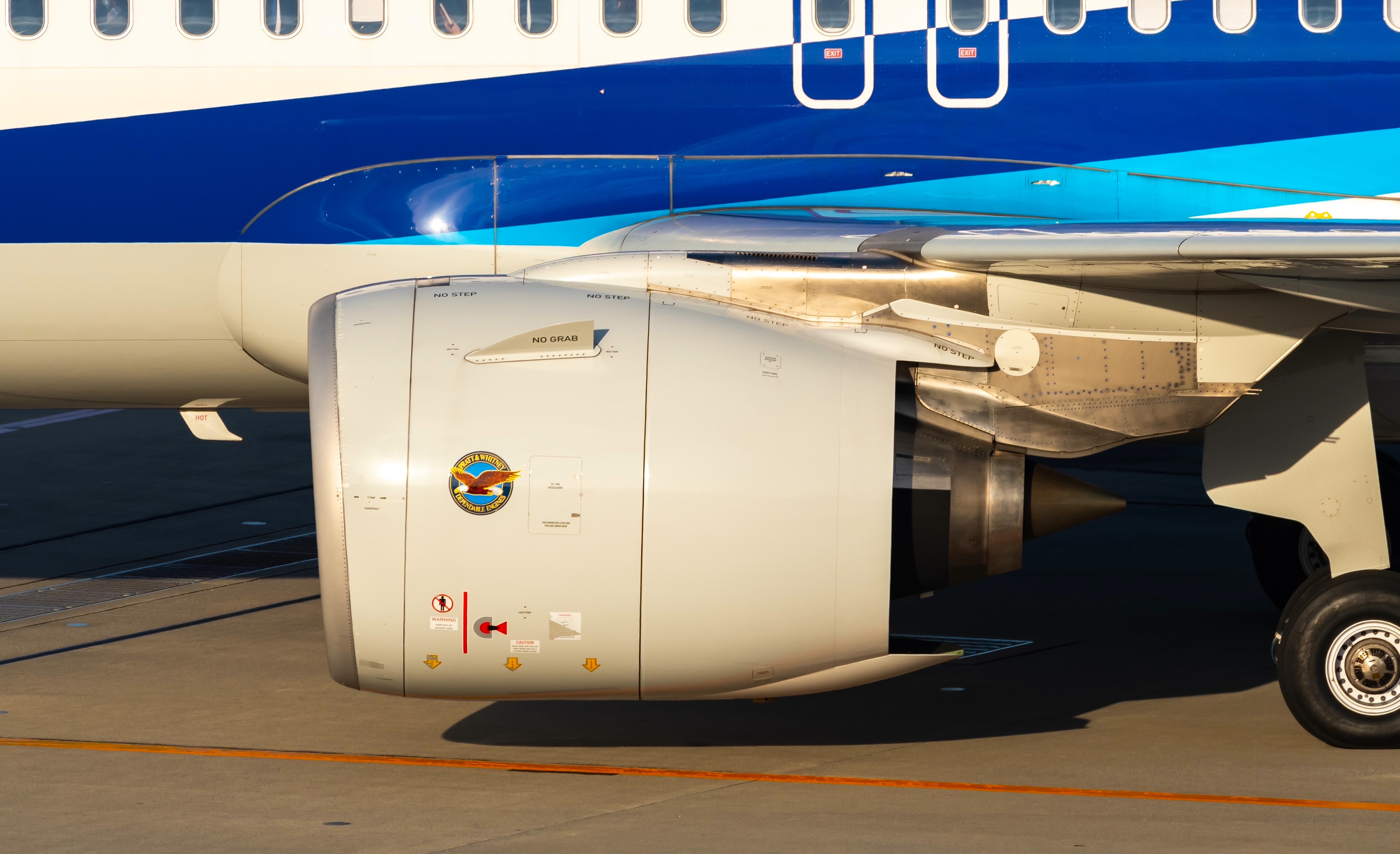
On January 12, 2026, the Federal Aviation Administration (FAA) issued a new Airworthiness Improvement Order (AD) for Pratt & Whitney PW1100G-JM and PW1400G-JM engines. The Airworthiness directive requires urgent modifications to the in-service Pratt & Whitney PW1100G engines after a series of engine fire incidents.
The airworthiness directive (AD) mandates operators to remove specific fuel hose clamps and replace thermal management system mounts on affected engines in different stages.
Affected operators of the aircraft powered by Pratt & Whitney PW1100G-JM and PW1400G-JM engines, must complete the initial maintenance within 30 days of the directive’s effective date, February 17, 2026.
This AD is in response to multiple fan blade rupture events in the same engine. Engine fires occurred in three of these. It is based on the maintenance instructions that Pratt & Whitney has shown so far, and the FAA has positioned it as a legal obligation.
The PW1100G engine powers the Airbus A320neo family alongside the CFM International Leap-1A. The FAA’s action was triggered by multiple reports of fan-blade fractures, three of which resulted in engine fires beneath the engine cowl. The agency emphasized that the directive aims to prevent fuel leaks caused by these fractures. The order affects 586 PW1100G engines installed on U.S.-registered aircraft.
The airworthiness directive (AD) read as,
"This AD was prompted by multiple reports of fan blade fracture events, three of which resulted in an engine under cowl fire or pool fire."
"This AD requires removal of one loop cushion clamp from the hydraulic fuel pressure fuel oil cooler fuel tube assembly (CP09 tube assembly), replacement of the thermal management system (TMS) clevis mounts with redesigned TMS clevis mounts, and reinstallation of the loop cushion clamp, as applicable. The FAA is issuing this AD to address the unsafe condition on these products."
This directive adds to the challenges airlines face amid a broader global recall of PW1000G engines. That recall stems from a metallic-component manufacturing defect that can lead to engine failures, forcing airlines worldwide to ground hundreds of aircraft equipped with Pratt & Whitney geared turbofans. The resulting operational disruptions have significantly impacted airline schedules and fleet availability.
The FAA’s directive formalizes maintenance procedures that Pratt & Whitney had previously recommended through service bulletins, which most operators have nearly completed. According to the manufacturer, the AD aligns with these earlier recommendations and reflects ongoing efforts to address the issue fleet-wide.
Under the new mandate, airlines must remove a “loop cushion clamp” associated with a fuel tube assembly within 30 days of February 17. At the next engine shop visit, operators are required to replace the thermal management system clevis mounts with redesigned components and reinstall the clamp.
Pratt & Whitney’s bulletins explain that fan-blade failures, such as those caused by bird strikes, can fracture these mounts, potentially cracking a fuel tube and causing leaks. Removing the clamp temporarily increases the fuel tube’s flexibility, helping to prevent cracks until the mounts are replaced.
As per FAA,
"This AD was prompted by multiple reports of fan blade fracture events, three of which resulted in an engine under cowl fire or pool fire. The FAA is issuing this AD to prevent a fuel leak resulting from a fan blade fracture. The unsafe condition, if not addressed, could result in an uncontrolled engine fire and damage to the airplane."
The FAA, which estimates that this AD affects 586 engines installed on airplanes of U.S. registry, also estimated that the maintenance will require approximately 125 work-hours per engine.
With this new development, operators will face increased maintenance costs and potential schedule disruptions as they comply with the directive, compounding the strain from ongoing engine recalls. The situation has intensified scrutiny of engine reliability in the market and may delay aircraft deliveries.
The directive’s impact extends beyond immediate maintenance challenges. Competitors, particularly CFM International, may leverage the situation to highlight the reliability and safety of their Leap-1A engines. As carriers manage these operational and financial pressures, the mandated modifications are expected to have broader repercussions across the aviation industry.
The FAA reviewed the following material for the issuance of the Airworthiness directive.
In the year 2023, a defect was discovered in the powder metallurgy manufacturing method of the PW1000G engines, and long-term maintenance procedures have occurred since then.
Pratt & Whitney identified a rare condition in powder metal used to manufacture certain engine parts, requiring accelerated fleet inspection as they expressed the requirement of inspections of around 1200 Pratt PW1100 engines off-wing, to go through Overhaul shop visit.
RTX said that the “rare condition” in powder metal used to manufacture the internal parts like high-pressure turbine disks , made between late 2015 and mid-2021 , will need to be inspected after dismantling the engine followed by inspections , and replacement if required.
You may like to read.......