
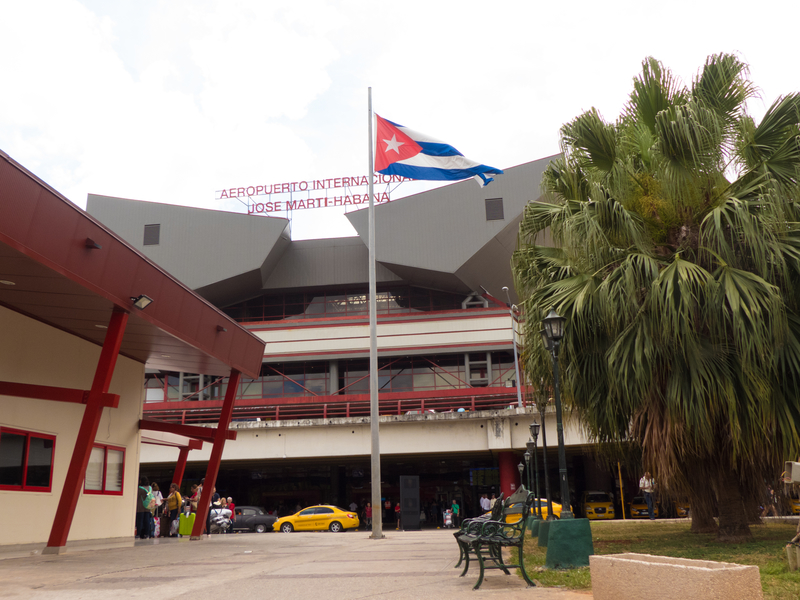
According to an official aviation notice (NOTAM) issued this Sunday by José Martí International Airport in Havana, the nine international airports in CUBA will not have Aviation Turbine Fuel for aircraft landing in the country for a full month, starting from February 10.
The NOTAM (Notice to Airmen) A0356/26, classified as international, indicated that there will be no Jet A-1 fuel available from February 10, 2026, at 05:00 UTC, until at least March 11, 2026, at 05:00 UTC, in nine international airports of Cuba.
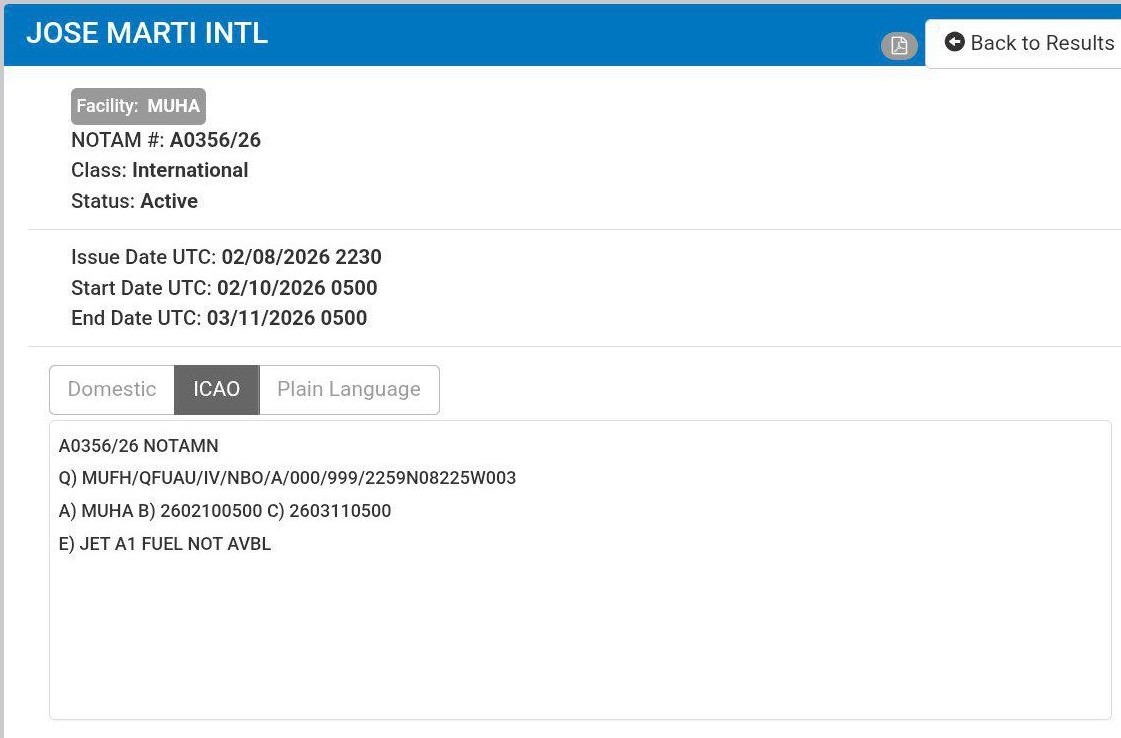
As per the notification, aircraft would not be able to refuel with Jet A-1 at the international airports of Havana (MUHA), Varadero (MUVR), Cienfuegos (MUCF), Santa Clara (MUSC), Camagüey (MUCM), Cayo Coco (MUCC), Holguín (MUHG), Santiago de Cuba (MUCU), and Manzanillo (MUMZ).
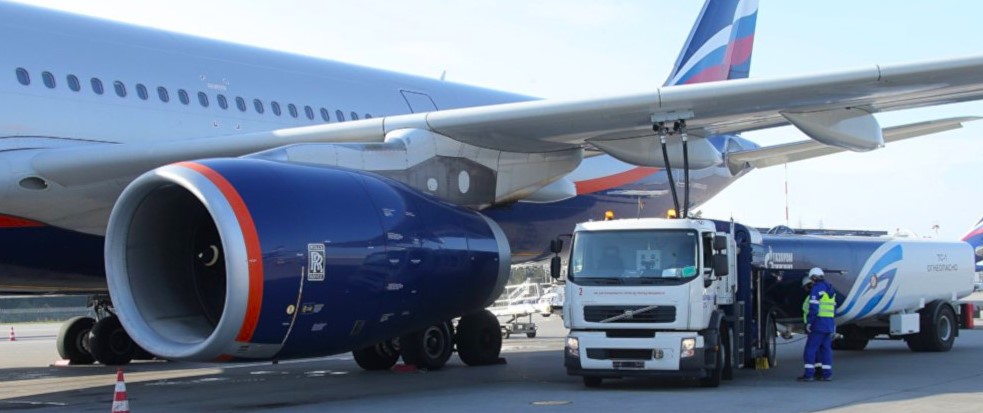
The developing scenario now forces foreign carriers to fly to Cuba with additional fuel (Fuel tankering) from the departure airports, to plan technical stops in other countries for refuelling, or to cancel flights.
While opting any of the above options, carriers will feel the pinch in operating costs and may reduce the regular routes to the island, which would have a severe impact on commercial flights resulting in detrimental effects for international tourism, charter services, cargo, and executive aviation.

The lack of fuel at Cuba's international airports will have a direct impact on important connections with the United States, Canada, Europe, and Latin America. Routes to cities such as Miami, Tampa, Fort Lauderdale, Madrid, Panama City, Cancun, and Mexico City are now facing a scenario of high uncertainty.
No carrier has announced the disruption of its operations due to this reason, but the NOTAM indicated that the issue is no longer a verbal warning from the Cuban government, but rather an operational limitation recognized in international aviation systems.
The notice, which is part of the global aeronautical alert system used to inform crews and airlines about conditions relevant to operations, also warned that at Havana Airport, "the landing aids under maintenance: ILS and frequencies for runway 06 have temporary limitations," while the RVR system for the runway (visibility measurement) "is not operational, affecting operations in low visibility."
The warning that nine international airports in the country will be out of fuel for planes for a month comes in the midst of a deep and sustained energy crisis that is already affecting multiple sectors of daily life in Cuba, from ground transportation to electricity generation, including the national fuel supply itself.
In recent days, the shortage of supplies has become more evident, and the authorities have implemented rationing and prioritization measures to sustain essential services.
The fuel crisis in the country is due to the reduction of oil and derivative imports and the situation is compounded by internal limitations in energy production and the deterioration of infrastructure, to which the leadership has responded with measures to restrict fuel sales.
The energey crisis in Cuba has been further exacerbated by the sanctions and restrictions that have hindered the shipment of oil and fuel from the countries that have traditionally been allies of the island's regime, such as Venezuela and Mexico.
The Jet A-1 fuel crisis in civil aviation, a key sector for connectivity and tourism, adds to a broader picture of energy and economic collapse, which has affected public transport, industrial production, and basic services.
The NOTAM on the unavailability of Jet A-1 at Cuban airports not only impacts airlines and scheduled flights but also highlights the structural and geopolitical limitations that the island faces in ensuring the operation of strategic sectors.