
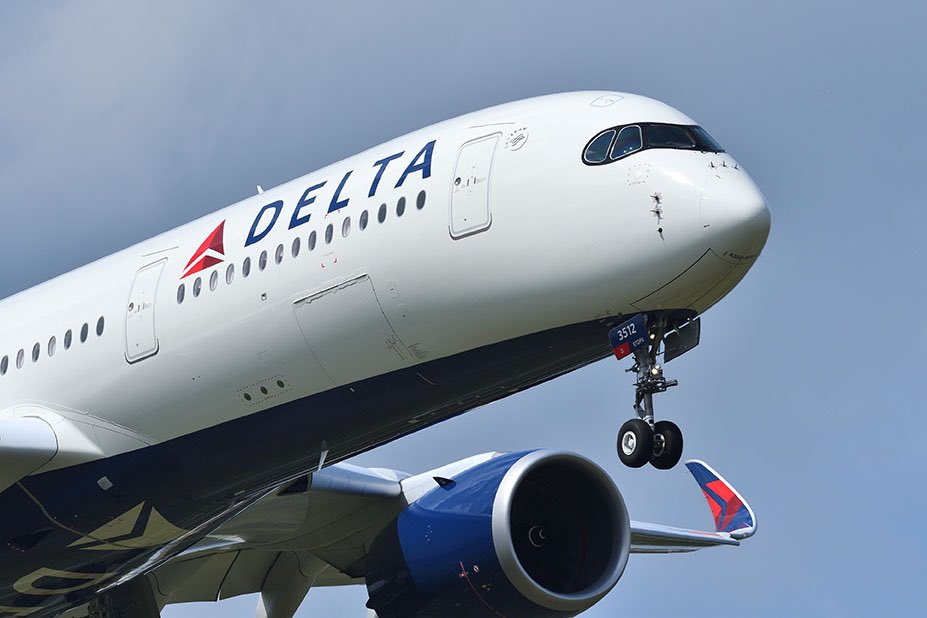
Delta Airlines mulls boosting profits by letting AI determine what price a customer is willing to pay.
Delta president Glen Hauenstein, told investors last week that 20% of the company's ticket prices will be AI-driven by the end of the year.
American Airlines won't use artificial intelligence (AI) to set prices in ways that are "just not good" or would lead to "distrust," as per CEO Robert Isom.
Delta Airlines has a long-term sales strategy to boost its profitability by moving away from set fares and toward individualized pricing using AI.
Terming Delta’s AI-powered fare strategy, a deceptive sales practice, American Airlines CEO Robert Isom took aim at the rival carrier on an earnings call this week, adding to the context that an opaque AI tactics risk alienating consumers who expect honest, transparent pricing.
Neither American Airlines CEO nor the reporter who raised the question named Delta Air Lines, but the references were made in that context.
Delta has said it would encourage the usage of the AI to identify the highest prices it can charge without losing sales, according to company's top leadership, citing "amazingly favorable" results.
These comments came from the Delta president Glen Hauenstein, who told investors last week that 20% of the company's ticket prices will be AI-driven by the end of the year. With this development, static pricing might vanish from all Delta fares.
Though in its early and “heavy testing” phase, the AI tool from the Israeli company Fetcherr is behind Delta’s plans. Fetcherr is automated and works like a constantly-on “super analyst” and is ushering in “a full reengineering of how we price,” Hauenstein said at the company’s Investor Day in November.
For a consumer's perspective, that means the AI will offer a specific price for a specific route at a specific time. Others might see different prices tailored to their profiles. If AI sets all fares, it can guess how much you're likely to pay based on what it knows about you.
In response to a question about using AI to help determine ticket pricing, Isom said, American Airlines Group (AAL) will make use of AI to operate more efficiently and showcase amenities to customers. But "some of the things I've heard are just not good."
“Consumers need to know that they can trust American,” Isom said. “This is not about bait and switch. This is not about tricking. Others that talk about using AI in that way — I don't think it's appropriate. And certainly, [at] American, it’s not something we will do.”
Isom added further, emphasizing that his carrier would attempt to leverage AI for operational efficiency, such as improving customer service and optimizing flight schedules, it would never use the technology to exploit customers or make them pay more. He added that “some of the things I’ve heard are just not good.”
On a recent earnings call, Delta’s president, Glen Hauenstein, said the company has rolled out its AI-powered pricing on a small portion (about 3%) of its domestic routes and is aiming to expand its AI use to 20% of its network by the end of the year.
Worth noting here, Delta released better-than-expected results for the June quarter. It would be interesting to know if AI pricing played a part in that.
The technology, designed to adjust ticket prices based on demand and customer profiles, has been praised by the company for its potential to maximize revenue. However, the technology has also raised eyebrows. especially among competitors and lawmakers.
U.S. Senators Ruben Gallego, Mark Warner, and Richard Blumenthal have demanded answers from Delta. In a letter made public on Tuesday, the three wrote,
“Delta’s current and planned individualized pricing practices not only present data privacy concerns, but will also likely mean fare price increases up to each individual consumer’s personal ‘pain point’ at a time when American families are already struggling with rising costs.”
Delta has since tried to explain its position, saying the company is just experimenting with AI to refine its dynamic pricing model, a tactic airlines have relied on for years to adjust fares depending on demand, timing, and other factors.
Atlanta based carrier said AI technology for dynamic pricing is being tested to eliminate manual processes while accelerating analysis and adjustments and it emphasised all customers see the same exact fares and offers in all retail channels.
As per Delta, it was testing AI for use in forecasting demand for specific routes and flights, adapting to market conditions in real-time, factoring thousands of variables simultaneously and learning from each pricing decision to improve future outcomes.
However, airline stressed that the technology isn't being used to tailor prices based on customer data, maintaining that all passengers see the same fares across all platforms.
“There is no fare product Delta has ever used, is testing, or plans to use that targets customers with individualized offers based on personal information,” the airline said in a statement.
“A variety of market forces drive the dynamic pricing model that’s been used in the global industry for decades, with new tech simply streamlining this process.”
While differential pricing is not an illegal act, federal laws prohibit charging different rates to people based on their sex or ethnicity, and the use of some identifiers like ZIP codes have been shown to have a disparate impact on protected classes.
Fetcherr, the six-year-old Israeli company that also claims Azul, WestJet, Virgin Atlantic, and VivaAerobus as clients. And it has its sights set beyond flying.
“Once we will be established in the airline industry, we will move to hospitality, car rentals, cruises, whatever,” cofounder Robby Nissan said at a travel conference in 2022.

.jpg)