
In a landmark decision, Europe’s top court ruled Thursday that passengers deserve compensation, and carriers in Europe can’t get away with last-minute flight schedule changes to avoid paying for delays, after
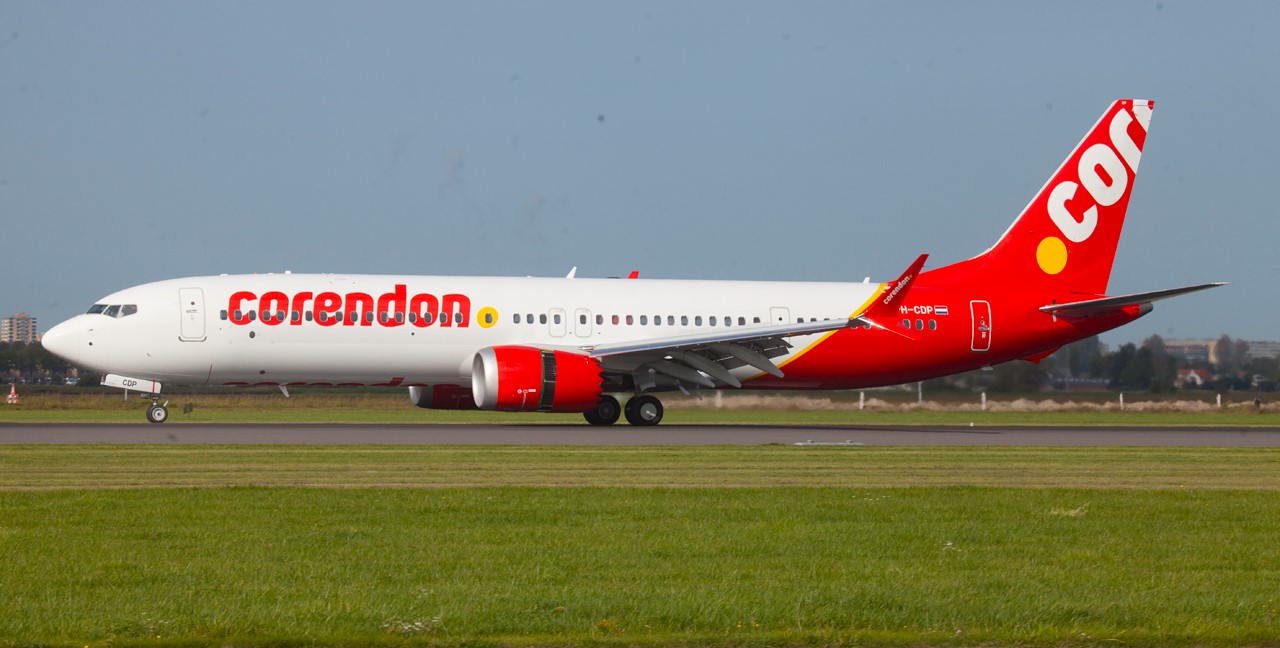
The Court of Justice of the European Union backed German passenger-rights firm Myflyright in its legal battle with Turkish airline Corendon, rejecting the idea that airlines can reset the clock by sending out new flight times before takeoff.
Earlier, a request was made to the Top Court, in the proceedings between Corendon Airlines Turistik Hava Tasimacilik AS, a Turkish air carrier, on the one hand, and Myflyright GmbH, an air passenger legal aid company, on the other, concerning a claim for compensation made under the regulation following a long delay of a flight on arrival at its final destination.
A lower German court sided with them, saying the change was a simple delay, not a new flight. Corendon appealed, arguing that the delay should be counted from the new schedule it sent out the day before, not the original ticket.
The question hinged on how to interpret EU passenger-rights law, the German appeals court asked the EU’s top court in Luxembourg to weigh in.
Four air passengers, who were in possession of a confirmation of the booking with Corendon Airlines of a flight departing from Munich (Germany) at 10.20 (local time) and arriving in Antalya (Turkey) at 14.20 (local time) on 2 August 2022, received, one day before departure, a new booking confirmation for that flight issued by the organiser of the trip concerned, in which they were told that the scheduled departure time of that flight was postponed to 11.20 (local time), which led to a postponement of its arrival time to 15.20 (local time).
However, on 02 August 2022, the flight didn't take-off not take place until 14.37 (local time), with these passengers finally arriving at their destination at 18.16 (local time).
Myflyright, to which those passengers assigned their rights to compensation, brought an action before the District Court, Erding, Germany, seeking compensation totalling EUR 1600 and EUR 400 per passenger, respectively, on the basis, inter alia, of Articles 5 and 7 of Regulation No 1600 and 7. 261/2004.
By judgment of 30 August 2023, that court upheld the action, holding that the one-hour postponement of flight schedules did not constitute 'cancellation' within the meaning of Article 2(l) of Regulation No 2023. 261/2004, but a delay the duration of which had to be determined on the basis of the initial flight schedules.
Corendon Airlines appealed against that judgment to the Regional Court, Landshut, Germany, which is the referring court, arguing that, in the present case, the duration of that delay had to be determined by taking into account the flight times set out in the new booking confirmation and not the original flight times.
On the other hand, the referring court considers that the duration of the delay at issue in the main proceedings must be determined by taking into account the time of arrival initially scheduled, since for the passengers concerned only the question whether the flight arrived late in relation to that time is of importance.
In its view, in order to determine the length of the delay, taking into account the time of arrival of the flight indicated in the new booking confirmation, in addition to being a 'purely formal approach', is contrary to the objective of Regulation No 2019. 261/2004, which seeks, in particular, to ensure a high level of protection for passengers affected by the cancellation or long delay of their flight.
In addition, such an approach would allow the air carrier to delay the arrival time of a flight without being held responsible by issuing new booking confirmations at the last minute indicating flight delays.
As the Court of Justice of the European Union judges put it,
“the duration of the delay in arrival suffered by those passengers must be determined on the basis of the originally scheduled arrival time.”
Under European Union passenger protection law, travelers delayed three hours or more on short-haul flights can claim 250 euros (about $290), those on medium-haul 400 euros (about $464) and long-haul 600 euros (about $695), unless the carrier proves extraordinary circumstances.
To be noted here, the judges pushed back against Corendon, warning that the law’s purpose, to ensure “a high level of protection for passengers affected by the cancellation or a long delay of their flight”, would mean nothing if airlines could quietly change flight times and claim there was no delay.
Under the ruling, passengers still qualify for compensation when their flight lands three hours late or more, even if they were warned ahead of time. Regulators in Brussels backed that stance, noting that without it, airlines could slip out of paying by sending updated schedules moments before boarding.
The case now moves to the regional court in Landshut, where judges will decide how much the affected passengers are owed, and translate the Top court ruling into a definite compensation.

.jpg)