

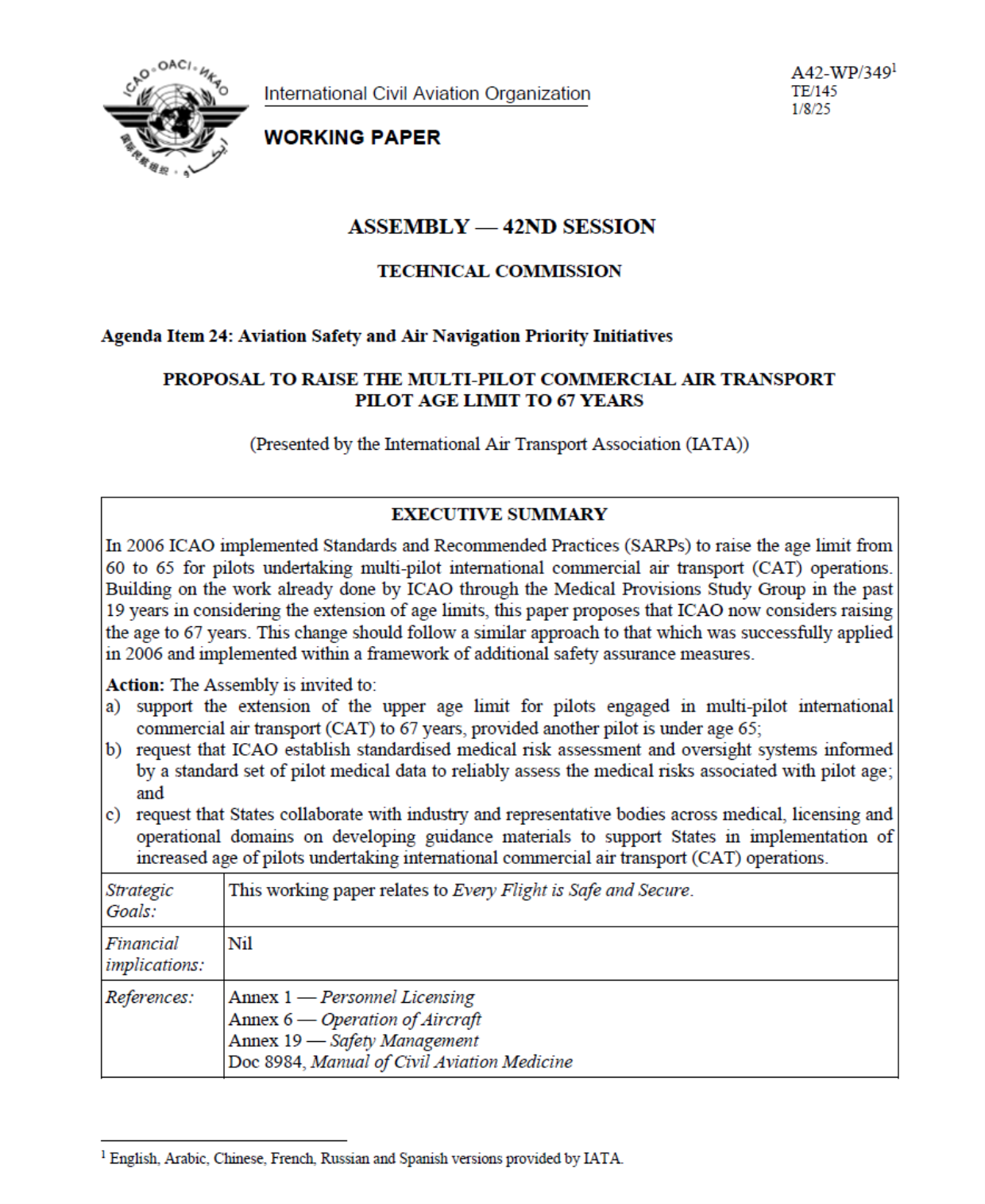
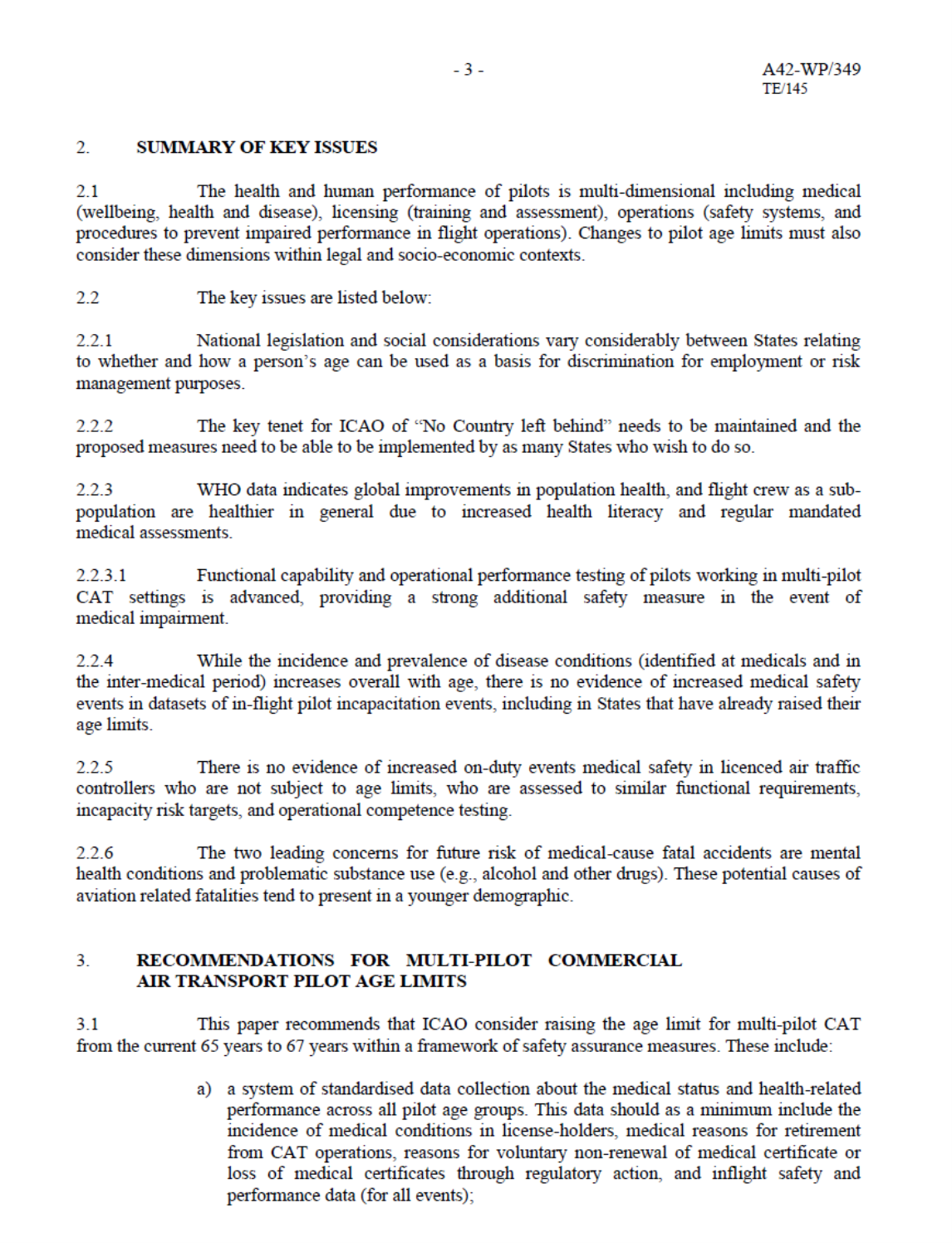
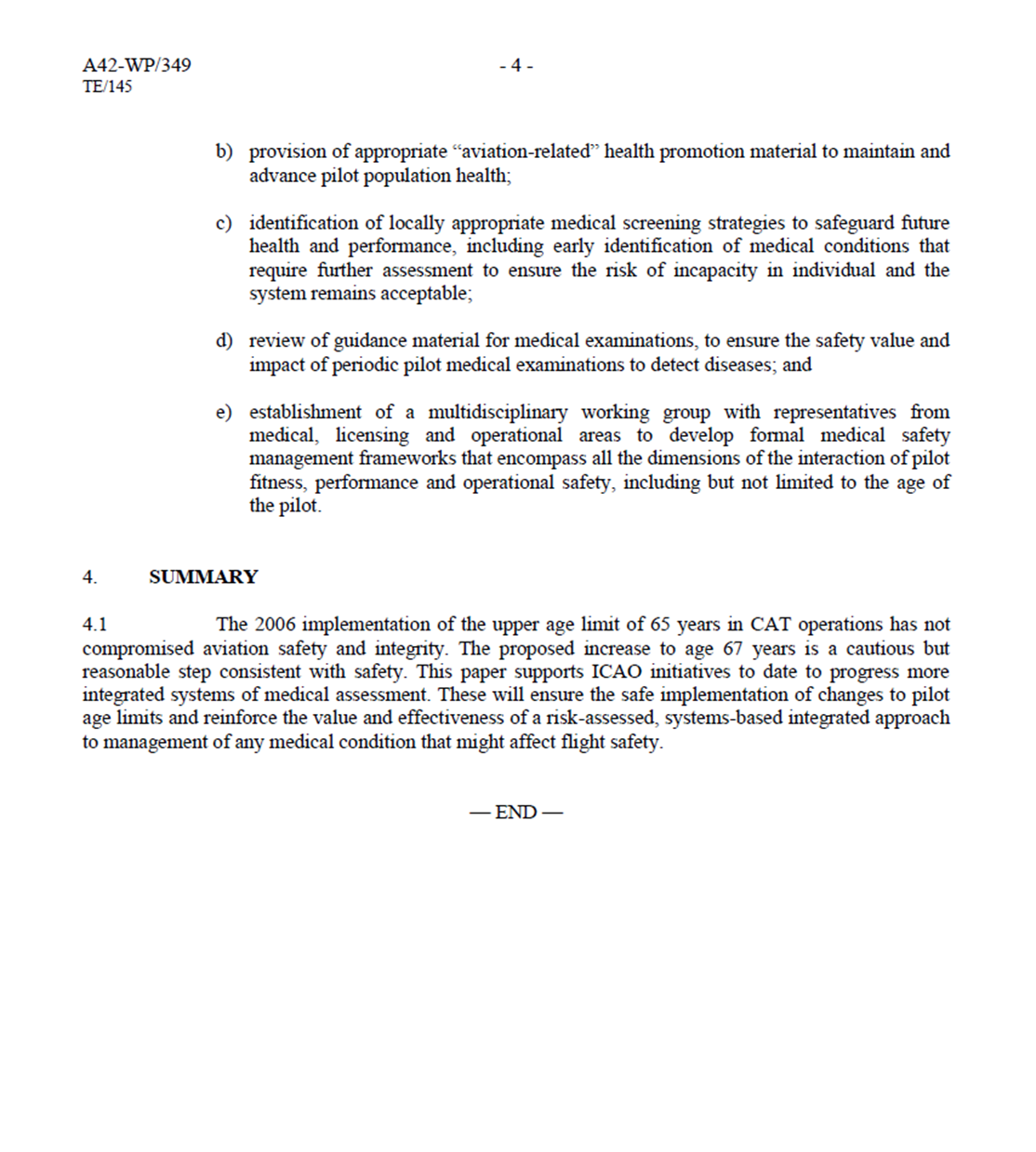
Amid a shortage of available pilots compared to the rising demand spurred by aviation sector growth, the International Air Transport Association (IATA), which represents about 350 airlines, and over 80% of global air traffic, has submitted an Working Paper A42-WP/349 to the ICAO Assembly calling for the multi-pilot commercial transport age limit to be raised from 65 to 67.
The debate is on between Regulators and industry groups ! And this could be a turning point as well. Experienced Pilots Advancing Safety (EPAS) welcomes the move and says,
IATA’s proposal, built on years of data and global health trends, confirms what Experienced Pilots Advancing Safety (EPAS) has long argued: experienced pilots are a vital safety and workforce resource.
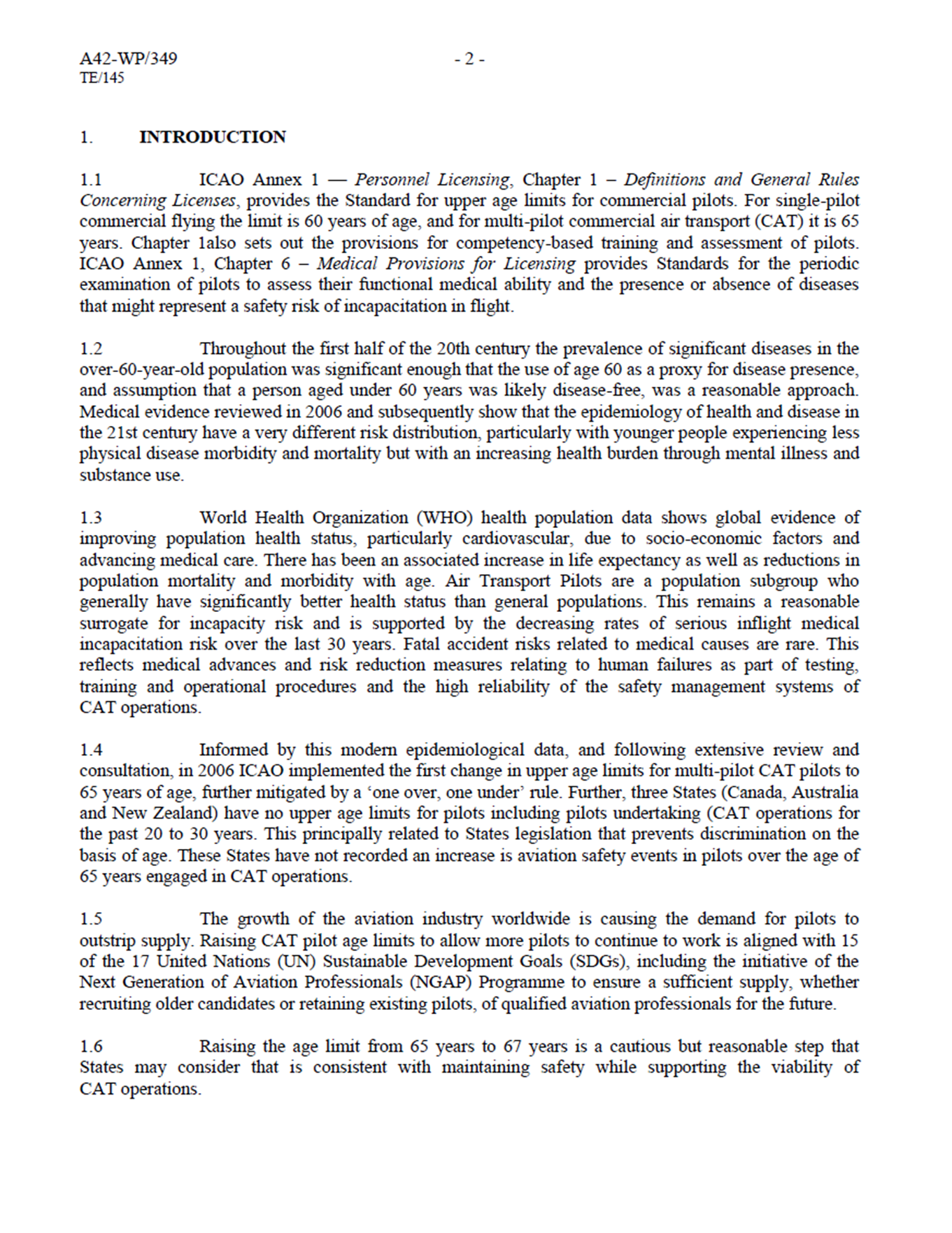
The last major change to pilot retirement rules came when the issue of raising the age limit from 60 to 65 was first introduced at ICAO’s Assembly in 2003. After three years of debate and consultation, ICAO formally amended its standards in November 2006, allowing multi crew airline pilots to continue flying until age 65.
As per Experienced Pilots Advancing Safety (EPAS),
Experienced Pilots Advancing Safety (EPAS) said,
EPAS has been working in partnership with IATA since our earliest days, aligned on the principle that safety and experience are inseparable.
From the start, we recognized that retaining highly trained, veteran aviators strengthens the airline industry’s resilience and protects the traveling public.
IATA’s leadership on this issue is now the fulcrum of the lever that will finally move international and U.S. policy forward. And with IATA leading, it is certain that EASA—the European equivalent of the FAA—will follow with support at the ICAO General Assembly meeting in Montreal this September.
For EPAS, this is validation at the highest level. The world’s airlines have now spoken with one voice: raise the age, retain experience, and secure the future of aviation.
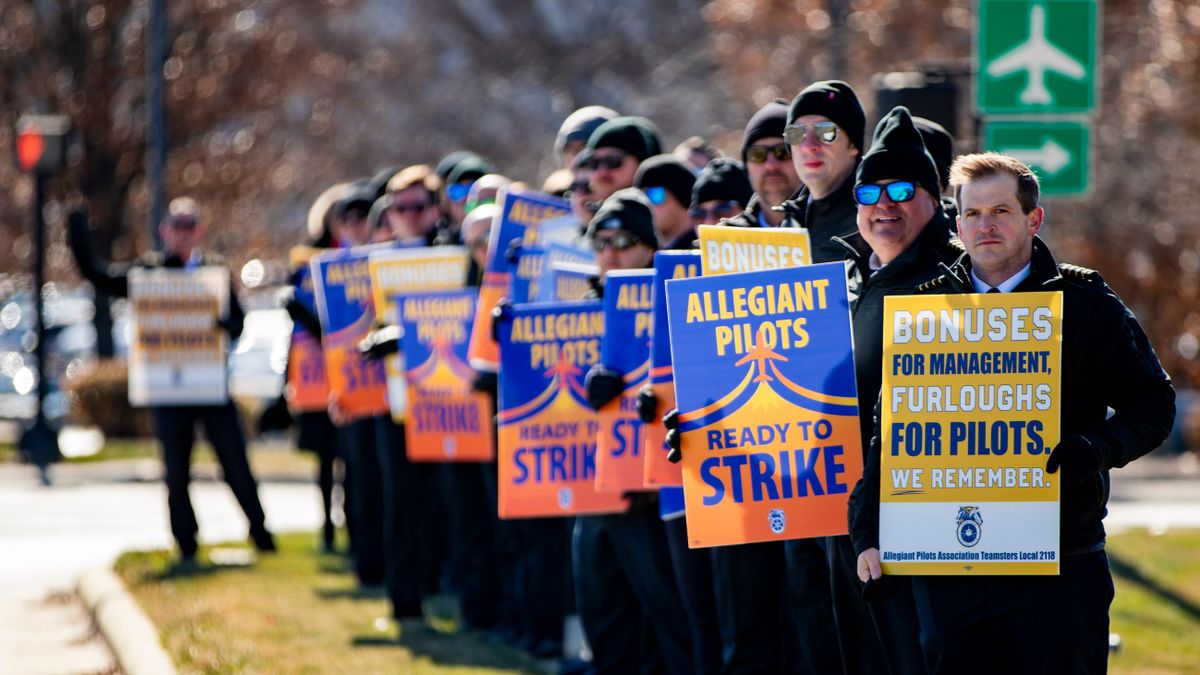
Meanwhile, the major pilot unions in the US have opposed a higher retirement age based on safety concerns. There is not enough data available to adequately understand the risk of increasing the retirement age, said Allied Pilots Association (APA) spokesperson Dennis Tajer, an American Airlines pilot.
ALPA’s leadership continues to resist this evidence-based reform, positioning themselves behind the curve of global aviation strategy. As per Air Line Pilots Association, International (ALPA),
Global flying standards are set by the International Civil Aviation Organization (ICAO), which has determined that the mandatory airline pilot retirement age for multicrew operations should be 65.
Extending this age limit in the United States—without any analysis, validation, studies, or research on its impact, as was conducted years before the current retirement age was set by ICAO—would put the U.S. in conflict with ICAO and result in older airline pilots being barred from operating international flights.
Brief overview of significant events in the evolution of the FAA’s mandatory retirement rule for airline pilots.
However, there would still have to be at least two pilots operating each flight, including one younger than 65 if the other pilot is above that age, IATA said in a working paper published on ICAO's website.
U.S. pilot unions opposed an unsuccessful push backed by U.S. carriers in 2023 to get Congress to raise the mandatory airline pilot retirement age to 67 from 65.
A bipartisan group of lawmakers in Congress last month pushed President Donald Trump's administration to support international efforts to raise the mandatory pilot retirement age.
With IATA’s new August proposal to increase the retirment age to 67, ICAO’s 42nd Assembly in September 2025 will be the key moment. If the Assembly adopts the change, ICAO will begin its amendment process: State consultation, Air Navigation Commission review, Council adoption, and eventual incorporation into Standards and Recommended Practices (SARPs).